Karmin
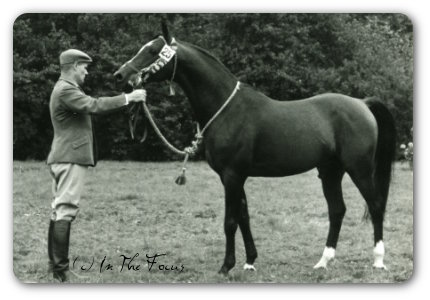
Photo © In The Focus
Horse Information
- Sex: stallion
- Color: bay
- Born: 1952-05-06
Additional Information
races in Poland 1955/56; imported to Germany 1958
Breeder
About Karmin
The State Stud Albigowa occupied a distinctive position in post-war Polish Arabian breeding. Among the stallions bred there was the internationally celebrated Bask, later exported to the United States, where he became the only Arabian to achieve both U.S. National Champion Stallion and U.S. National Champion Park Horse titles, and ultimately the breed’s all-time leading sire of champions and National winners. Albigowa also bred Bask's full-sister Bandola (Witraz x Balalajka), one of the most beautiful mares of her era.
Within this same breeding program, four years earlier, the bay stallion Karmin was foaled. Sired by Witraz, Karmin was a half-brother to Bask. Although his international fame never approached that of Bask, Karmin likewise reflected Albigowa’s consistent breeding philosophy: the production of structurally correct, performance-capable stallions firmly anchored in strong Polish maternal families. Karmin's significance would unfold not through spectacular show-ring acclaim, but through steady and regionally influential breeding work in Germany.
Karmin's sire Witraz was one of the four major sons by Ofir who shaped Polish breeding after World War II, alongside Witez II, Wind (Wyrdidab) and Wielki Szlem. Witraz contributed a distinctly dry, elegant type combined with correct structure and athletic functionality.
Karmin’s dam was the bay Canaria, a daughter by Trypolis (by Enwer Bey).
Sired by Witraz and out of Canaria, Karmin was a full brother to Celebes, one of the more influential Polish stallions of his generation. Celebes achieved significant recognition within Poland and left a visible mark in the domestic breeding program.
In the late 1950, Karmin was exported to Germany. In Germany, he was used in private breeding programs and also at Marbach State Stud. Through Canaria, Karmin’s pedigree made him genetically compatible with Halef daughters at Marbach: Halef was by Enwer Bey who was also the grandsire of Canaria, the dam of Karmin.
Karmin sired several licensed sons in Germany. Among the most relevant was the bay Daikir (1959, out of Haifa) who was later used within the Marbach breeding program and himself sire of breeding sons. Another one was Nabuch (1964, out of Nadja), whose son Dschinn became successful within the German riding pony sector.
Karmin's son Semit (x Hajar, born in 1965) was exported by Count Zichy-Thyssen to Argentina. There Semit was a sire of excellent broodmares (such as his sire), many exported to Brazil. He was also named Argentinian National Champion.
In contrast, his son Daoud (out of the grey mare Hamdi) stood out primarily for his coat color—a chestnut with pronounced white markings. Although his progeny record was limited, he was distinguished by remarkable longevity, reaching almost 30 years of age at the time of his death in 1993.
Several of Karmin’s daughters achieved breeding significance, though they were relatively few in number. Among these were Katjuscha (1961, by Mekka/Kerbella), Estra (1962, a.d. Koranah), Dawa (1965, by Hamdi), Dindara (1965, by Winarsad), and Kismet II (1965, by Ikah).
His daughter Dawa was the dam of German Elite stallion Dahab (by Monrad) who in turn was sire of Mosri Al Dahab. Mosri Al Dahab (x Mosila by Penthagonn) was a well-trained stallion who also competed in endurance and dressage competitions. He was used at Marbach for one breeding season, producing five foals including the grey stallion WM Daraschad (x Dahi by Insh Allah, 2021) who will be used as future sire at Marbach.
Another daughter, the grey Haita daughter Saider (born 1965) was the dam of Ibn Hadsai (by Hadban Enzahi) who was successfully halter shown.
Karmin’s most enduring contribution came through his daughter Dalila (1961–1990), bred at Zoo Duisburg. Dalila was widely regarded as the most typical of his daughters, closely reflecting the phenotype of her grandsire Witraz. Dalila produced sixteen foals, an exceptional lifetime record. Of her nine colts, six were licensed. Her most important son was Kaidal II, who became a foundation stallion in East Germany. Although five of Dalila’s daughters entered breeding, including Kaidarana and Kaidalana (both by Kaisoon), not much is left from her through her female line.
Another small family is still active over Karmin's daughter Dindara, mainly through Dschesira (by Shaker El Masri) and Djulica (by Padisha).
All in all, Karmin must be understood as a functional bridge stallion: genetically Polish in origin, practically influential within German breeding. He did not reshape the international Arabian landscape, nor did he found a globally dominant sire line. However, within the context of mid-20th-century German Arabian development, he provided reliable type, structural correctness, and prepotent maternal influence.
Within this same breeding program, four years earlier, the bay stallion Karmin was foaled. Sired by Witraz, Karmin was a half-brother to Bask. Although his international fame never approached that of Bask, Karmin likewise reflected Albigowa’s consistent breeding philosophy: the production of structurally correct, performance-capable stallions firmly anchored in strong Polish maternal families. Karmin's significance would unfold not through spectacular show-ring acclaim, but through steady and regionally influential breeding work in Germany.
Karmin's sire Witraz was one of the four major sons by Ofir who shaped Polish breeding after World War II, alongside Witez II, Wind (Wyrdidab) and Wielki Szlem. Witraz contributed a distinctly dry, elegant type combined with correct structure and athletic functionality.
Karmin’s dam was the bay Canaria, a daughter by Trypolis (by Enwer Bey).
Sired by Witraz and out of Canaria, Karmin was a full brother to Celebes, one of the more influential Polish stallions of his generation. Celebes achieved significant recognition within Poland and left a visible mark in the domestic breeding program.
In the late 1950, Karmin was exported to Germany. In Germany, he was used in private breeding programs and also at Marbach State Stud. Through Canaria, Karmin’s pedigree made him genetically compatible with Halef daughters at Marbach: Halef was by Enwer Bey who was also the grandsire of Canaria, the dam of Karmin.
Karmin sired several licensed sons in Germany. Among the most relevant was the bay Daikir (1959, out of Haifa) who was later used within the Marbach breeding program and himself sire of breeding sons. Another one was Nabuch (1964, out of Nadja), whose son Dschinn became successful within the German riding pony sector.
Karmin's son Semit (x Hajar, born in 1965) was exported by Count Zichy-Thyssen to Argentina. There Semit was a sire of excellent broodmares (such as his sire), many exported to Brazil. He was also named Argentinian National Champion.
In contrast, his son Daoud (out of the grey mare Hamdi) stood out primarily for his coat color—a chestnut with pronounced white markings. Although his progeny record was limited, he was distinguished by remarkable longevity, reaching almost 30 years of age at the time of his death in 1993.
Several of Karmin’s daughters achieved breeding significance, though they were relatively few in number. Among these were Katjuscha (1961, by Mekka/Kerbella), Estra (1962, a.d. Koranah), Dawa (1965, by Hamdi), Dindara (1965, by Winarsad), and Kismet II (1965, by Ikah).
His daughter Dawa was the dam of German Elite stallion Dahab (by Monrad) who in turn was sire of Mosri Al Dahab. Mosri Al Dahab (x Mosila by Penthagonn) was a well-trained stallion who also competed in endurance and dressage competitions. He was used at Marbach for one breeding season, producing five foals including the grey stallion WM Daraschad (x Dahi by Insh Allah, 2021) who will be used as future sire at Marbach.
Another daughter, the grey Haita daughter Saider (born 1965) was the dam of Ibn Hadsai (by Hadban Enzahi) who was successfully halter shown.
Karmin’s most enduring contribution came through his daughter Dalila (1961–1990), bred at Zoo Duisburg. Dalila was widely regarded as the most typical of his daughters, closely reflecting the phenotype of her grandsire Witraz. Dalila produced sixteen foals, an exceptional lifetime record. Of her nine colts, six were licensed. Her most important son was Kaidal II, who became a foundation stallion in East Germany. Although five of Dalila’s daughters entered breeding, including Kaidarana and Kaidalana (both by Kaisoon), not much is left from her through her female line.
Another small family is still active over Karmin's daughter Dindara, mainly through Dschesira (by Shaker El Masri) and Djulica (by Padisha).
All in all, Karmin must be understood as a functional bridge stallion: genetically Polish in origin, practically influential within German breeding. He did not reshape the international Arabian landscape, nor did he found a globally dominant sire line. However, within the context of mid-20th-century German Arabian development, he provided reliable type, structural correctness, and prepotent maternal influence.
Full Siblings
Celebes
(1949, bay stallion)
Progeny
Mindil
(1958, chestnut stallion)
Daikir
(1959, bay stallion)
Dalila
(1961, bay mare)
Hamin
(1964, bay stallion)
Jubilee
(1964, bay stallion)
Saider
(1965, grey mare)
Dawa
(1965, grey mare)
Semerch
(1965, bay stallion)
Salem
(1965, grey stallion)
Sherall
(1965, bay stallion)
Semit
(1965, grey stallion)
Dindara
(1965, bay mare)
Kalinka
(1971, bay mare)