Piaff
March 24, 2026, Photo © Gudrun Waiditschka
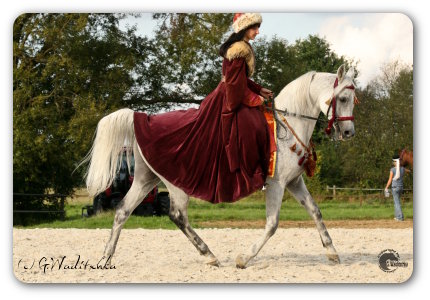
Piaff
When Piaff (Eldon x Pipi) was named Polish National Champion Colt in 1999, it marked the first major milestone in the career of a stallion who would later gain recognition both in Poland and abroad. Bred at the historic Janów Podlaski State Stud, the grey stallion combined two distinguished Polish bloodlines and would go on to achieve success as both a show horse and breeding stallion, leaving a lasting legacy in Europe and the United States.
Tall, athletic and striking in appearance, Piaff quickly drew attention for his elegance and presence. His pedigree united influential lines of the Polish Arabian breeding program, blending generations of carefully selected stallions with one of the most celebrated mare families maintained at Janów Podlaski.
His sire Eldon, a son of Penitent out of Erotyka, belonged to the most admired stallions of his generation. Eldon captured the titles of European Champion Stallion in 1991 and Polish National Champion Stallion in 1992, later becoming an influential sire within the Polish breeding program. Through him, Piaff traced to the historic Ilderim sire line, which passed through notable breeding stallions such as Penitent, Partner, Eleuzis, and Aquinor. This line produced important international champions including Elkin++ and Elkana++, and contributed significantly to the development of the modern Polish Arabian.
If Piaff’s sire line was distinguished, his dam line was arguably even more celebrated. His dam Pipi, by Banat out of Pilarka, was herself a Polish National Champion Mare and one of the most valuable broodmares at Janów Podlaski. Pipi descended from the renowned P-family, a line originating from the mare Piewica (Priboj x Wlodarka) bred at the Tersk Stud in Russia and later imported to Poland. Over time, this family produced some of the most influential and admired Arabians in the world.
Pipi’s dam Pilarka achieved remarkable international fame. A daughter of Palas, she was twice World Champion Mare, a Salon du Cheval Champion, and British National Champion and Best in Show at the remarkable age of seventeen. Pilarka was later acquired by Paolo Gucci and eventually lived at Halsdon Stud in Great Britain under the care of Shirley Watts, where she remained one of the most celebrated mares of her generation.
The strength of this maternal family continued to influence modern Arabian breeding. From the same lineage emerged renowned horses such as Pianissima, widely regarded as one of the greatest show mares in Arabian history, as well as influential horses including Pilar, Pinga, Piniata, Paterna, Perfirka, and Perfinka. Piaff therefore represented a direct continuation of one of the most successful and internationally recognized Polish mare families.
Pipi also produced other notable offspring, including the bay stallion Pilot (Fawor x Pipi), a maternal half-brother to Piaff. Pilot achieved early success as Polish National Junior Champion Stallion in 1988 before beginning an international career that took him to the United States and later to Halsdon Arabians in Great Britain, where he became an important breeding stallion.
While Piaff’s pedigree promised excellence, it was his own performance that confirmed his quality. Following his early victory as Polish National Champion Colt in 1999, he began a racing career on the Polish tracks. Between 2000 and 2001, Piaff made 20 starts, recording two wins, four second places, two fourth places and three fifth-place finishes. Although he was best known for his type and presence in the show ring, these performances demonstrated the athletic ability that has long been valued in Polish Arabian breeding.
Returning to the show arena, Piaff continued to build an impressive record. In 2002, during a lease to Vlasakker Arabians in the Netherlands, he was crowned Dutch National Champion Stallion. The farm, owned by Jackie Vanden Biggelaar, became an enthusiastic supporter of the stallion and played an important role in introducing him to European breeders.
After returning to Poland, Piaff continued to excel in the show ring. He was named Polish National Reserve Champion Stallion in 2004, followed by his crowning achievement when he became Polish National Champion Stallion in 2005, firmly establishing his place among the leading stallions of his generation.
Piaff’s international influence expanded further when he was leased to Aria Arabians in the United States from 2005 to 2007. During this time he was presented in halter classes and attracted considerable attention from American breeders, who admired his balance, correctness and athletic ability. His stay in the United States proved highly productive, leaving a number of successful offspring that continue to represent his legacy.
Among his most successful American progeny were Ohya+// (x Oriwia), a multi-National champion, and Airs Above+++/ (x Alada Arianna), a highly successful sport horse stallion, not to forget Kalaloch+/ (x Ahbliss), a U.S. National and Sport Horse National Champion.
In Europe and Poland, Piaff also left a number of influential offspring: Piaff’s son Alert (x Andaluzja) achieved notable success of his own, becoming Polish National Junior Champion Stallion in 2006 and Polish National Senior Champion Stallion in 2010. Another son, Albedo (x Albigowa), established a successful breeding career at Vineyard Arabians in Slovenia. Albedo was full-brother Augusta who was later broodmare at Halsdon Stud, UK.
Beyond halter competition, Piaff also demonstrated notable versatility. A crowd favorite when shown under saddle, he performed successfully in dressage and traditional costume classes, where his athleticism and expressive movement made him a memorable presence in the arena.
In recognition of his contributions to the Arabian breed, Piaff was awarded the WAHO Trophy for Poland in 2011, one of the highest honors bestowed upon Arabian horses worldwide. The award recognized his impact as a show horse, breeding stallion, and international ambassador for the Polish Arabian.
Through his pedigree, performance and progeny, Piaff embodied the qualities long associated with the Polish Arabian horse—beauty, athleticism, and enduring genetic value. His career, spanning Poland, Europe, and the United States, demonstrated the global influence of the Janów Podlaski breeding program and ensured that the legacy of his remarkable bloodlines continues in the generations that follow.
Tall, athletic and striking in appearance, Piaff quickly drew attention for his elegance and presence. His pedigree united influential lines of the Polish Arabian breeding program, blending generations of carefully selected stallions with one of the most celebrated mare families maintained at Janów Podlaski.
His sire Eldon, a son of Penitent out of Erotyka, belonged to the most admired stallions of his generation. Eldon captured the titles of European Champion Stallion in 1991 and Polish National Champion Stallion in 1992, later becoming an influential sire within the Polish breeding program. Through him, Piaff traced to the historic Ilderim sire line, which passed through notable breeding stallions such as Penitent, Partner, Eleuzis, and Aquinor. This line produced important international champions including Elkin++ and Elkana++, and contributed significantly to the development of the modern Polish Arabian.
If Piaff’s sire line was distinguished, his dam line was arguably even more celebrated. His dam Pipi, by Banat out of Pilarka, was herself a Polish National Champion Mare and one of the most valuable broodmares at Janów Podlaski. Pipi descended from the renowned P-family, a line originating from the mare Piewica (Priboj x Wlodarka) bred at the Tersk Stud in Russia and later imported to Poland. Over time, this family produced some of the most influential and admired Arabians in the world.
Pipi’s dam Pilarka achieved remarkable international fame. A daughter of Palas, she was twice World Champion Mare, a Salon du Cheval Champion, and British National Champion and Best in Show at the remarkable age of seventeen. Pilarka was later acquired by Paolo Gucci and eventually lived at Halsdon Stud in Great Britain under the care of Shirley Watts, where she remained one of the most celebrated mares of her generation.
The strength of this maternal family continued to influence modern Arabian breeding. From the same lineage emerged renowned horses such as Pianissima, widely regarded as one of the greatest show mares in Arabian history, as well as influential horses including Pilar, Pinga, Piniata, Paterna, Perfirka, and Perfinka. Piaff therefore represented a direct continuation of one of the most successful and internationally recognized Polish mare families.
Pipi also produced other notable offspring, including the bay stallion Pilot (Fawor x Pipi), a maternal half-brother to Piaff. Pilot achieved early success as Polish National Junior Champion Stallion in 1988 before beginning an international career that took him to the United States and later to Halsdon Arabians in Great Britain, where he became an important breeding stallion.
While Piaff’s pedigree promised excellence, it was his own performance that confirmed his quality. Following his early victory as Polish National Champion Colt in 1999, he began a racing career on the Polish tracks. Between 2000 and 2001, Piaff made 20 starts, recording two wins, four second places, two fourth places and three fifth-place finishes. Although he was best known for his type and presence in the show ring, these performances demonstrated the athletic ability that has long been valued in Polish Arabian breeding.
Returning to the show arena, Piaff continued to build an impressive record. In 2002, during a lease to Vlasakker Arabians in the Netherlands, he was crowned Dutch National Champion Stallion. The farm, owned by Jackie Vanden Biggelaar, became an enthusiastic supporter of the stallion and played an important role in introducing him to European breeders.
After returning to Poland, Piaff continued to excel in the show ring. He was named Polish National Reserve Champion Stallion in 2004, followed by his crowning achievement when he became Polish National Champion Stallion in 2005, firmly establishing his place among the leading stallions of his generation.
Piaff’s international influence expanded further when he was leased to Aria Arabians in the United States from 2005 to 2007. During this time he was presented in halter classes and attracted considerable attention from American breeders, who admired his balance, correctness and athletic ability. His stay in the United States proved highly productive, leaving a number of successful offspring that continue to represent his legacy.
Among his most successful American progeny were Ohya+// (x Oriwia), a multi-National champion, and Airs Above+++/ (x Alada Arianna), a highly successful sport horse stallion, not to forget Kalaloch+/ (x Ahbliss), a U.S. National and Sport Horse National Champion.
In Europe and Poland, Piaff also left a number of influential offspring: Piaff’s son Alert (x Andaluzja) achieved notable success of his own, becoming Polish National Junior Champion Stallion in 2006 and Polish National Senior Champion Stallion in 2010. Another son, Albedo (x Albigowa), established a successful breeding career at Vineyard Arabians in Slovenia. Albedo was full-brother Augusta who was later broodmare at Halsdon Stud, UK.
Beyond halter competition, Piaff also demonstrated notable versatility. A crowd favorite when shown under saddle, he performed successfully in dressage and traditional costume classes, where his athleticism and expressive movement made him a memorable presence in the arena.
In recognition of his contributions to the Arabian breed, Piaff was awarded the WAHO Trophy for Poland in 2011, one of the highest honors bestowed upon Arabian horses worldwide. The award recognized his impact as a show horse, breeding stallion, and international ambassador for the Polish Arabian.
Through his pedigree, performance and progeny, Piaff embodied the qualities long associated with the Polish Arabian horse—beauty, athleticism, and enduring genetic value. His career, spanning Poland, Europe, and the United States, demonstrated the global influence of the Janów Podlaski breeding program and ensured that the legacy of his remarkable bloodlines continues in the generations that follow.