Moheba II
January 16, 2026, Photo © In The Focus
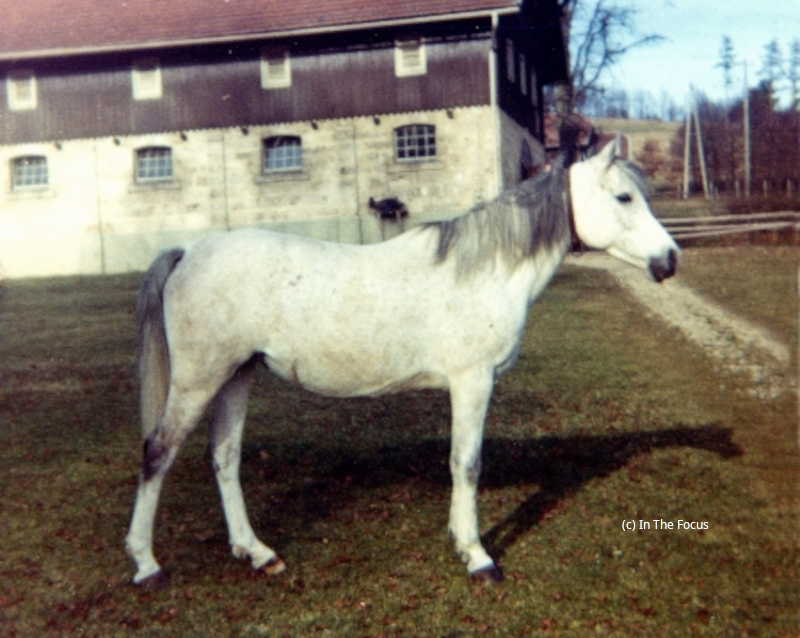
Moheba II
For Baron of Inn- und Knyphausen, breeding Arabian horses was never a matter of fashion or numbers, but of responsibility. Each mating carried the weight of history, each foal the promise of continuity. When the grey mare Moheba II was born in 1960 at Lütetsburg, he would have recognized her not as a momentary success, but as the embodiment of a carefully built vision: the union of the finest Egyptian bloodlines ever imported to Germany. In her pedigree stood the stallion Ghazal, whose arrival had changed the course of German Arabian breeding, and the mare Malacha, the first purely Egyptian-bred foal born in the country and already a cornerstone of the emerging Straight Egyptian population.
Straight Egyptian in breeding and classical in type, Moheba II measured approximately 14.3 hands, and was later awarded the title of German Elite Mare, a distinction reserved for broodmares of proven and lasting genetic value.
Her sire was the legendary Ghazal (Nazeer x Bukra), one of the three Nazeer sons imported to Germany in the mid-20th century. Ghazal’s presence in German breeding transcended numbers; he transmitted refinement, nobility, and a distinctive ethereal quality that left a deep emotional and genetic imprint on those who encountered him. Through Bukra, Ghazal was a full brother to Ansata Bint Bukra, later foundation mare of Ansata Arabians, giving Moheba II a pedigree anchored in the very core of Egyptian breeding philosophy.
Moheba II’s dam, Malacha (by El Sareei), was herself a mare of formidable importance. Born in Germany in 1955, Malacha was the first purely Egyptian-bred foal born on German soil and would become one of the most influential Egyptian broodmares in the country’s history. Though not conventionally beautiful, Malacha was renowned for her strong character, intelligence, and uncompromising personality. Nearly all significant Straight Egyptian horses bred in Germany trace back to her, including stallions such as Madkour I, Malik, Mahomed, Ibrahim, and Motassem. Through Malacha, Moheba II inherited not only genetic quality but also a powerful matriarchal legacy.
The strength of this female line extended further back through Moheba (Sid Abouhom x Halima), Malacha’s dam and Moheba II’s granddam. Imported from Egypt in 1955 together with the young Ghazal, the original Moheba was described by Landstallmeister Bilke as a mare of pronounced Arabian type, strong maternal expression, excellent shoulder, and elastic movement. Her influence on German Egyptian breeding was profound, rivaling that of her famous brother Ansata Ibn Halima in the United States.
In 1965, Moheba II was leased together with her sire Ghazal to the German State Stud of Marbach. Her matings, particularly to the Straight Egyptian stallion Hadban Enzahi, the iconic chief sire of Marbach, would cement her reputation as one of the most important broodmares of her generation.
Moheba II produced thirteen foals, among them an extraordinary group of sons who would leave a lasting mark on both state and private studs. Most notable was Madkour I (by Hadban Enzahi), one of the leading German-bred Straight Egyptian sires and German Elite Stallion, admired for his consistency and prepotency. His full brother Mameluck became chief sire at the stud farm of the von Kameke family, while Moneef, also by Hadban Enzahi, served as chief stallion at Marbach.
Further sons included Melek (by Ibrahim), who stood at Lütetsburg, and Ibn Moheba (by Nizzam), an Asil Cup Champion born when Moheba II was already 22 years old. Despite their quality, both stallions were regrettably underused in breeding.
Another son, Mossul, born in 1973, by Hadban Enzahi even spread Moheba II's bloodline across the Atlantic when he was exported in 1977 to Barbara and John Affolter in the USA. Mossul left ten registered purebreds.
Through Moheba II's daughter Molawa by Haladin (who was by the Polish bred Halef), Moheba II became granddam of significant horses such as the licensed stallion Monrad, the important Marbach broodmare Magda, and Magda’s influential son Mardschan. All other daughters and descendants of Moheba II were utilized exclusively within Asil breeding programs, where her influence proved equally reliable.
In 1987, tragedy struck when Moheba II died during transport to her new home near Ludwigsburg. She was 27 years old.
Straight Egyptian in breeding and classical in type, Moheba II measured approximately 14.3 hands, and was later awarded the title of German Elite Mare, a distinction reserved for broodmares of proven and lasting genetic value.
Her sire was the legendary Ghazal (Nazeer x Bukra), one of the three Nazeer sons imported to Germany in the mid-20th century. Ghazal’s presence in German breeding transcended numbers; he transmitted refinement, nobility, and a distinctive ethereal quality that left a deep emotional and genetic imprint on those who encountered him. Through Bukra, Ghazal was a full brother to Ansata Bint Bukra, later foundation mare of Ansata Arabians, giving Moheba II a pedigree anchored in the very core of Egyptian breeding philosophy.
Moheba II’s dam, Malacha (by El Sareei), was herself a mare of formidable importance. Born in Germany in 1955, Malacha was the first purely Egyptian-bred foal born on German soil and would become one of the most influential Egyptian broodmares in the country’s history. Though not conventionally beautiful, Malacha was renowned for her strong character, intelligence, and uncompromising personality. Nearly all significant Straight Egyptian horses bred in Germany trace back to her, including stallions such as Madkour I, Malik, Mahomed, Ibrahim, and Motassem. Through Malacha, Moheba II inherited not only genetic quality but also a powerful matriarchal legacy.
The strength of this female line extended further back through Moheba (Sid Abouhom x Halima), Malacha’s dam and Moheba II’s granddam. Imported from Egypt in 1955 together with the young Ghazal, the original Moheba was described by Landstallmeister Bilke as a mare of pronounced Arabian type, strong maternal expression, excellent shoulder, and elastic movement. Her influence on German Egyptian breeding was profound, rivaling that of her famous brother Ansata Ibn Halima in the United States.
In 1965, Moheba II was leased together with her sire Ghazal to the German State Stud of Marbach. Her matings, particularly to the Straight Egyptian stallion Hadban Enzahi, the iconic chief sire of Marbach, would cement her reputation as one of the most important broodmares of her generation.
Moheba II produced thirteen foals, among them an extraordinary group of sons who would leave a lasting mark on both state and private studs. Most notable was Madkour I (by Hadban Enzahi), one of the leading German-bred Straight Egyptian sires and German Elite Stallion, admired for his consistency and prepotency. His full brother Mameluck became chief sire at the stud farm of the von Kameke family, while Moneef, also by Hadban Enzahi, served as chief stallion at Marbach.
Further sons included Melek (by Ibrahim), who stood at Lütetsburg, and Ibn Moheba (by Nizzam), an Asil Cup Champion born when Moheba II was already 22 years old. Despite their quality, both stallions were regrettably underused in breeding.
Another son, Mossul, born in 1973, by Hadban Enzahi even spread Moheba II's bloodline across the Atlantic when he was exported in 1977 to Barbara and John Affolter in the USA. Mossul left ten registered purebreds.
Through Moheba II's daughter Molawa by Haladin (who was by the Polish bred Halef), Moheba II became granddam of significant horses such as the licensed stallion Monrad, the important Marbach broodmare Magda, and Magda’s influential son Mardschan. All other daughters and descendants of Moheba II were utilized exclusively within Asil breeding programs, where her influence proved equally reliable.
In 1987, tragedy struck when Moheba II died during transport to her new home near Ludwigsburg. She was 27 years old.