Ghazal 1953
January 4, 2026, Photo © In The Focus
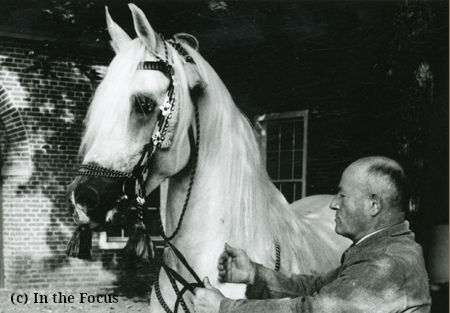
Ghazal 1953
Some horses enter history quietly, through lists of names and breeding records. Others arrive like an apparition — sudden, luminous, and impossible to forget. Ghazal belonged to the latter.
Born in 1953 at the Egyptian State Stud El Zahraa, Ghazal carried within him the distilled essence of Egyptian breeding at its purest. He was a son of the legendary Nazeer, and out of Bukra, a mare of exceptional nobility and genetic clarity. Through her, Ghazal was full brother to Ansata Bint Bukra, later to become the foundation mare of Ansata Arabians.
When Ghazal first appeared in Germany in the mid-1950s, the Arabian horse was still largely misunderstood. Imported together with his half-brother Hadban Enzahi, Ghazal was placed at the Lütetsburg stud, owned by the Prince zu Inn- und Knyphausen. There, amid the red brick walls of the North German water castle and manicured gravel paths, the silver Egyptian stallion stepped into a world that was not yet ready for him.
Eyewitnesses describe his arrival as almost unreal. Erika Schiele, later one of the most influential chroniclers of Arabian horses in Germany, recalled the moment Ghazal entered the scene: snow-white coat shimmering with a metallic sheen, mane and tail like flowing silk, his movement light and elevated, his presence otherworldly. When he halted and fixed his gaze upon the onlooker, it was as though time itself paused. Many would later say that this single encounter changed the course of their lives.
At first, the exotic newcomer stood in the shadow of the more robust Haladin, another stallion at Lütetsburg. But Ghazal needed no loud proclamation. His foals spoke for him — daughters of extraordinary refinement, type and expression, whose elegance disarmed even the most skeptical observers. Slowly but inexorably, Ghazal revealed his true power: not force, but nobility.
Then president of the German Arabian association Mr Bilke, described Ghazal as “a Saklawi as if taken straight from the picture book.” Ghazal was most notable for his very noble and exotic head set on an excellent neck. His weakness might be his "hind quarter". What some later criticized as a “high croup,” Bilke recognized as part of Ghazal’s authentic type — and time would prove him right, as these traits reappeared with remarkable consistency in Ghazal’s descendants.
For ten years, Ghazal served as chief sire at Lütetsburg, shaping a generation of mares whose influence would ripple through German breeding. In 1965, he moved with his mares and daughters to the German State Stud of Marbach, where his half-brother Hadban Enzahi had already stood as chief stallion for nearly a decade. There, Ghazal sired Saher, out of Sahmet — herself considered the most beautiful daughter by Hadban Enzahi. Saher later became chief sire at Marbach.
Yet Ghazal’s destiny lay elsewhere.
Years earlier, a young man named Carl-Heinz Dömken had first encountered Ghazal at Lütetsburg. He had arrived with the romantic image of a coal-black Arabian stallion like in Karl May’s description of the Arab stallion Rih in mind — and left with the vision of a snow-white prince instead. From that day on, Ghazal became his dream horse, a living embodiment of everything the Arabian horse could and should be.
Ghazal was considered unattainable. But dreams, when pursued with patience and devotion, sometimes yield. In 1967, through the goodwill of the Fürst zu Inn- und Knyphausen (and his stud's dispersal) and the Marbach Landstallmeister, Ghazal was released from state service and entered the private stud of Carl-Heinz Dömken — not as property, but as family.
For five years, Ghazal stood at the heart of Dömken’s breeding program, shaping not only horses, but ideas. Though he sired fewer direct offspring than his brothers Hadban Enzahi and Kaisoon, his influence proved no less profound. His daughters became cornerstones, his sons carriers of his spirit.
Through mares like Algaida, Ghazal sired multiple future stallions. His daughters Akaba and Ayesha pioneered new breeding concepts, opening the path for Egyptian stallions crossed with Spanish mares — an idea later perfected at Om El Arab. With the Morafic daughter Afifa, imported directly from Cairo, Ghazal’s line returned once more to its Egyptian roots. Their daughter Ghazala, and later Ghaza, ensured that his blood would continue to flow with clarity and purpose.
On 30 May 1972, Ghazal died tragically at the age of nineteen. His loss was deeply felt — not only by his owner, but by an entire generation of breeders and enthusiasts. Carl-Heinz Dömken, artist and writer, later erected a literary monument to his beloved stallion with the book “Ghazal – Der Fürst der Pferde.” Perhaps Ghazal’s greatest legacy is not measured in numbers of offspring, but in something far less tangible and far more enduring. Encounters with Ghazal left people changed. Erika Schiele called it “Arabitis” — the sudden, irreversible infection with the fascination of the Arabian horse. Those struck by it never truly recovered.
Born in 1953 at the Egyptian State Stud El Zahraa, Ghazal carried within him the distilled essence of Egyptian breeding at its purest. He was a son of the legendary Nazeer, and out of Bukra, a mare of exceptional nobility and genetic clarity. Through her, Ghazal was full brother to Ansata Bint Bukra, later to become the foundation mare of Ansata Arabians.
When Ghazal first appeared in Germany in the mid-1950s, the Arabian horse was still largely misunderstood. Imported together with his half-brother Hadban Enzahi, Ghazal was placed at the Lütetsburg stud, owned by the Prince zu Inn- und Knyphausen. There, amid the red brick walls of the North German water castle and manicured gravel paths, the silver Egyptian stallion stepped into a world that was not yet ready for him.
Eyewitnesses describe his arrival as almost unreal. Erika Schiele, later one of the most influential chroniclers of Arabian horses in Germany, recalled the moment Ghazal entered the scene: snow-white coat shimmering with a metallic sheen, mane and tail like flowing silk, his movement light and elevated, his presence otherworldly. When he halted and fixed his gaze upon the onlooker, it was as though time itself paused. Many would later say that this single encounter changed the course of their lives.
At first, the exotic newcomer stood in the shadow of the more robust Haladin, another stallion at Lütetsburg. But Ghazal needed no loud proclamation. His foals spoke for him — daughters of extraordinary refinement, type and expression, whose elegance disarmed even the most skeptical observers. Slowly but inexorably, Ghazal revealed his true power: not force, but nobility.
Then president of the German Arabian association Mr Bilke, described Ghazal as “a Saklawi as if taken straight from the picture book.” Ghazal was most notable for his very noble and exotic head set on an excellent neck. His weakness might be his "hind quarter". What some later criticized as a “high croup,” Bilke recognized as part of Ghazal’s authentic type — and time would prove him right, as these traits reappeared with remarkable consistency in Ghazal’s descendants.
For ten years, Ghazal served as chief sire at Lütetsburg, shaping a generation of mares whose influence would ripple through German breeding. In 1965, he moved with his mares and daughters to the German State Stud of Marbach, where his half-brother Hadban Enzahi had already stood as chief stallion for nearly a decade. There, Ghazal sired Saher, out of Sahmet — herself considered the most beautiful daughter by Hadban Enzahi. Saher later became chief sire at Marbach.
Yet Ghazal’s destiny lay elsewhere.
Years earlier, a young man named Carl-Heinz Dömken had first encountered Ghazal at Lütetsburg. He had arrived with the romantic image of a coal-black Arabian stallion like in Karl May’s description of the Arab stallion Rih in mind — and left with the vision of a snow-white prince instead. From that day on, Ghazal became his dream horse, a living embodiment of everything the Arabian horse could and should be.
Ghazal was considered unattainable. But dreams, when pursued with patience and devotion, sometimes yield. In 1967, through the goodwill of the Fürst zu Inn- und Knyphausen (and his stud's dispersal) and the Marbach Landstallmeister, Ghazal was released from state service and entered the private stud of Carl-Heinz Dömken — not as property, but as family.
For five years, Ghazal stood at the heart of Dömken’s breeding program, shaping not only horses, but ideas. Though he sired fewer direct offspring than his brothers Hadban Enzahi and Kaisoon, his influence proved no less profound. His daughters became cornerstones, his sons carriers of his spirit.
Through mares like Algaida, Ghazal sired multiple future stallions. His daughters Akaba and Ayesha pioneered new breeding concepts, opening the path for Egyptian stallions crossed with Spanish mares — an idea later perfected at Om El Arab. With the Morafic daughter Afifa, imported directly from Cairo, Ghazal’s line returned once more to its Egyptian roots. Their daughter Ghazala, and later Ghaza, ensured that his blood would continue to flow with clarity and purpose.
On 30 May 1972, Ghazal died tragically at the age of nineteen. His loss was deeply felt — not only by his owner, but by an entire generation of breeders and enthusiasts. Carl-Heinz Dömken, artist and writer, later erected a literary monument to his beloved stallion with the book “Ghazal – Der Fürst der Pferde.” Perhaps Ghazal’s greatest legacy is not measured in numbers of offspring, but in something far less tangible and far more enduring. Encounters with Ghazal left people changed. Erika Schiele called it “Arabitis” — the sudden, irreversible infection with the fascination of the Arabian horse. Those struck by it never truly recovered.