Ofirka
November 20, 2026, Photo archive
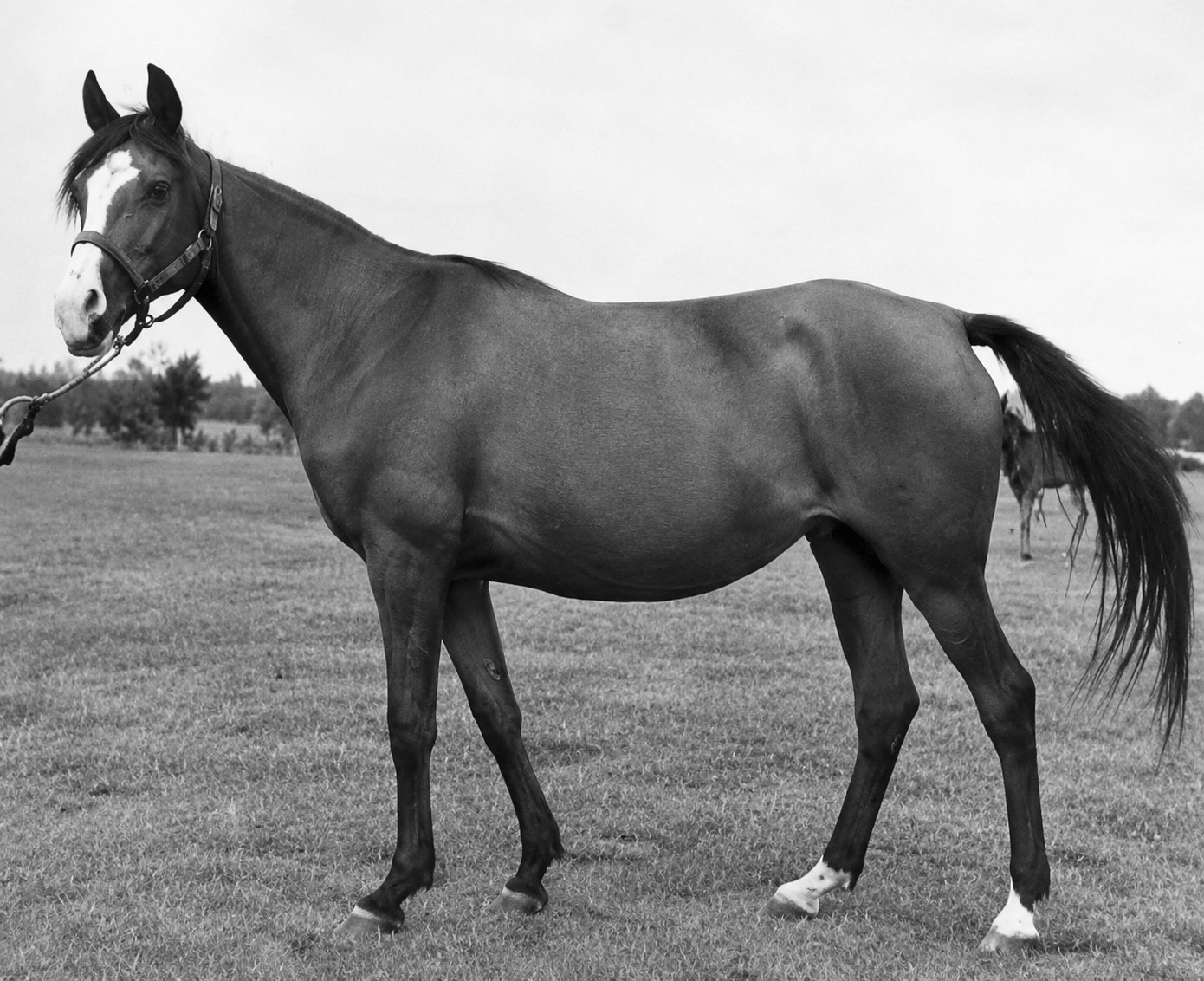
Ofirka
The bay mare Ofirka was born in 1939 at Janow Podlaski, Poland. Ofirka was sired by Ofir. The bay stallion Ofir, born in 1933 at Janow Podlaski, was by the desert bred stallion Kuhailan Haifi out of Dziwa. Although his breeding career in Poland was cut short by the outbreak of World War II, Ofir left a lasting mark on Arabian horse breeding. In 1939, he was stolen from Poland by the Russians, having sired just 21 foals in Poland, many of which were subsequently lost during the war.
Among his most influential Polish sons were Witraz and Wielki Szlem, both of became instrumental in rebuilding Polish Arabian breeding after the war. Witraz became the sire of Bask, one of the most influential stallions in American Arabian breeding, while Wielki Szlem established an important legacy through his sons and daughters, particularly as a sire of broodmares. Other notable Polish sons included Witez II, who achieved considerable success in the United States, and Wyrwidab, later known as Wind, who contributed to German breeding.
Ofirka's dam was Fryga II, a bay mare foaled in 1924. She was by Bakszysz and out of Gazella II, one of the important foundation mares of Janów Podlaski. Her dam, Gazella II (1914), was bred at the Jezupol stud of Count Wladyslaw Dzieduszycki, by Kohejlan (1903) out of Abra by Anvil. In 1919, Gazella II was acquired by Henryk Przewlocki of the Mordy Estate. The following year, she was transferred to Janów Podlaski, where she became an important foundation mare. A productive broodmare, she produced four stallions and eight mares, contributing to the development of the Polish breeding program. Her daughter Fryga II produced another notable daughter: Maskota (by Koheilan I), whose descendants included the grey stallion Pilot (Trypolis x Zalotna x Maskota).
According to the Janow Podlaski studbook, Ofirka produced 18 registered foals between 1944 and 1963: ten stallions and eight mares. Among them were full-siblings Orla and Orzel (both by Pietuszok).
Orla (1962), a bay mare, became one of Poland's outstanding Arabian racehorses of her generation. Her achievements included the Polish Derby, the Oaks and two Criterium victories in 1966, earning her recognition as a Polish Triple Crown winner. Her achievements established her as an important representative of Ofirka's family. Orla was eventually exported to the United States in 1982.
Ofirka's son Orzel (1963), a chestnut stallion, also made his mark on both sides of the Atlantic. Bred at Janow Podlaski, he was exported to the United States in 1967 by E. J. Tweed of Brusally Ranch. Orzel recorded six wins, four second places and one third place in twelve starts, earning the title of U.S. National Champion Racehorse for 1967. He subsequently demonstrated his versatility in the show ring, becoming a U.S. and Canadian Top Ten Stallion, a U.S. Top Ten English Pleasure winner and U.S. National Champion in Sidesaddle. As a sire, he produced 98 registered purebred Arabians, including five stakes winners: SGR Vayu, Orzela, Brusally Gaysar, Worzel and Brusally Orlen. Orzel died in 1984 and is buried at Brusally Ranch in Show Low, Arizona.
Among Ofirka's other daughters was Adis Abeba (1947), by Amurath Sahib. She became the dam of several notable horses, including Ardahan (1954), a grey stallion imported into the United States in 1961, Antwerpia (1953), the dam of Werbor, and Amhara (1969), by Naborr. The latter produced Artemida, 1979 Polish Reserve National Champion Mare.
Another daughter of Ofirka, Gastronomia (1946), deserves particular mention. This Marabut daughter founded the influential Polish Arabian G family, which became particularly prominent at Janow Podlaski and Michalow. Among her offspring was Grojec (1960), by Comet, a bay stallion bred at Nowy Dwor Stud. He was acquired by Lady Anne Lytton, daughter of Lady Wentworth, and became an important sire at her British stud, where he was used extensively. He later went to the USA where he sired 52 registered purebreds. Another significant son was Gedymin, by Gwarny, who served as a breeding stallion in Poland and, like Grojec, in the United States as well.
Gastronomia's legacy continued through her descendants, producing internationally recognized horses, including the World Champion Stallion Gondolier and Polish National and World Reserve Champion Mare Galilea, Polish National Champion Mare Grenlandia and Polish broodmares such as Gilza and Gomora. Further notable stallions descending from this family were 1982 Swedish National Champion Stallion Gokart (by Partner) and 2001 Polish National Champion, 2001 All Nations Cup Reserve Champion and 2003 US National Reserve Champion Stallion Ganges (by Monogramm).
Ofirka's story is remarkable not only for her own survival during the turmoil of the Second World War, but also for the lasting influence she exerted through her descendants. Her importance as a broodmare was rooted in a distinguished maternal heritage, reaching back to her granddam Gazella II. Had Ofirka perished during the war, as so many horses did, a valuable branch of this family would have been lost. Instead, she went on to pass this heritage to subsequent generations, leaving a lasting mark on Polish and international Arabian breeding.