Kohinoor 1931
July 6, 2026, Photo archive
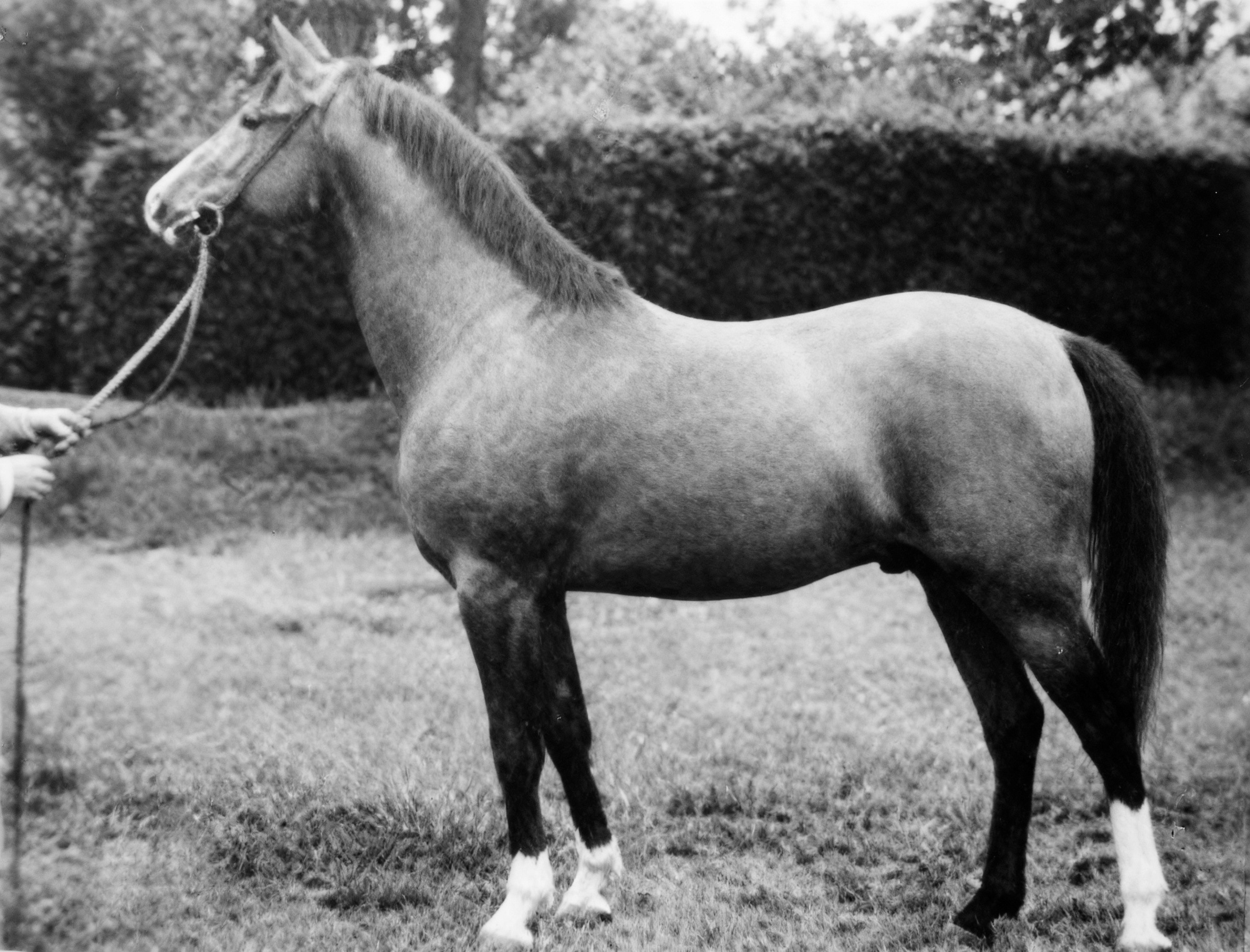
Kohinoor 1931
Kohinoor was foaled in 1931 at the Inocenzdvor Stud of Prince Odescalschi in Ilok, then part of Yugoslavia (now Croatia). He was sired by Koheilan IV-3, a son by Koheilan IV, who was bred at the Bábolna National Stud. Koheilan IV (Koheilan II x 124 O'Bajan) stood at stud at Bábolna, where he sired numerous Shagya Arabians and Purebred Arabians before being exchanged late in life to the Weil Stud. Kohinoor's paternal granddam, 10 Gazal (by Gazal), was out of the flea-bitten grey mare 214 Scherife, acquired for Bábolna by Michael Fadlallah el Hedad in 1901–1902.
Kohinoor's dam, Hedbar, was bred at Inocenzdvor and produced only two recorded foals. She was by Kadi, who was later transferred to Bábolna State Stud and registered there as Siglavi Bagdady III. Hedbar's dam, Hadschna (Barbari x Hasna), traced to the desert-bred mare Caramba, imported from the Middle East by Prince Roman Sanguszko for his Slawuta Stud in Poland.
According to the German Arabian Horse Studbook, Kohinoor was registered as light bay. He was noted for his harmonious, well-balanced conformation and strong overall presence, with elegant proportions and smooth, flowing body lines that reflected an ideally balanced frame. His refined head, large expressive eyes, and overall expression contributed to his noble appearance, while his correct proportions exemplified the functional type valued in European state stud breeding programs of the period.
Unfortunately, Kohinoor had little impact on Purebred Arabian breeding. After his importation to Germany in 1936, he was acquired for the Holsteiner state breeding program, where he was used primarily as a refinement sire on Holsteiner mares rather than on Purebred Arabians. His breeding career was further curtailed by the outbreak of World War II, which severely disrupted state stud operations and breeding programs all over Europe. As a result, he left relatively few recorded offspring. Among his best-known sons were the approved Holsteiner stallion Kollmar and his full brother Konus, one of Germany's leading show jumpers in the immediate post-war years. His influence also continued through his daughter Oldenburg, the dam of the influential Holsteiner breeding stallion Lichtbote, through whom Kohinoor's blood became firmly established in the Holsteiner breed.
According to Dr. Grote, Director of the State Stud Traventhal, Kohinoor was sold from the State Stud to a private breeder in 1946 at the age of 15. It was only after this sale that he is known to have sired offspring carrying Arabian blood. The German Arabian Horse Stud Book records three such progeny: the Anglo-Arabian gelding Kobold, the Anglo-Arabian mare Wilja, and the half-bred Arabian Taifun K 193, out of the mare Sahiba Nigra (by Amurath Sahib).
After that, he disappears from the historical record, and neither his subsequent life nor his date of death has been documented in the available published sources. While he did not establish a lasting legacy within Purebred Arabian breeding, his influence continued through the Holsteiner breeding program.
Kohinoor's dam, Hedbar, was bred at Inocenzdvor and produced only two recorded foals. She was by Kadi, who was later transferred to Bábolna State Stud and registered there as Siglavi Bagdady III. Hedbar's dam, Hadschna (Barbari x Hasna), traced to the desert-bred mare Caramba, imported from the Middle East by Prince Roman Sanguszko for his Slawuta Stud in Poland.
According to the German Arabian Horse Studbook, Kohinoor was registered as light bay. He was noted for his harmonious, well-balanced conformation and strong overall presence, with elegant proportions and smooth, flowing body lines that reflected an ideally balanced frame. His refined head, large expressive eyes, and overall expression contributed to his noble appearance, while his correct proportions exemplified the functional type valued in European state stud breeding programs of the period.
Unfortunately, Kohinoor had little impact on Purebred Arabian breeding. After his importation to Germany in 1936, he was acquired for the Holsteiner state breeding program, where he was used primarily as a refinement sire on Holsteiner mares rather than on Purebred Arabians. His breeding career was further curtailed by the outbreak of World War II, which severely disrupted state stud operations and breeding programs all over Europe. As a result, he left relatively few recorded offspring. Among his best-known sons were the approved Holsteiner stallion Kollmar and his full brother Konus, one of Germany's leading show jumpers in the immediate post-war years. His influence also continued through his daughter Oldenburg, the dam of the influential Holsteiner breeding stallion Lichtbote, through whom Kohinoor's blood became firmly established in the Holsteiner breed.
According to Dr. Grote, Director of the State Stud Traventhal, Kohinoor was sold from the State Stud to a private breeder in 1946 at the age of 15. It was only after this sale that he is known to have sired offspring carrying Arabian blood. The German Arabian Horse Stud Book records three such progeny: the Anglo-Arabian gelding Kobold, the Anglo-Arabian mare Wilja, and the half-bred Arabian Taifun K 193, out of the mare Sahiba Nigra (by Amurath Sahib).
After that, he disappears from the historical record, and neither his subsequent life nor his date of death has been documented in the available published sources. While he did not establish a lasting legacy within Purebred Arabian breeding, his influence continued through the Holsteiner breeding program.