Said 1999
April 18, 2026, Photo © Aline Sagrabelny
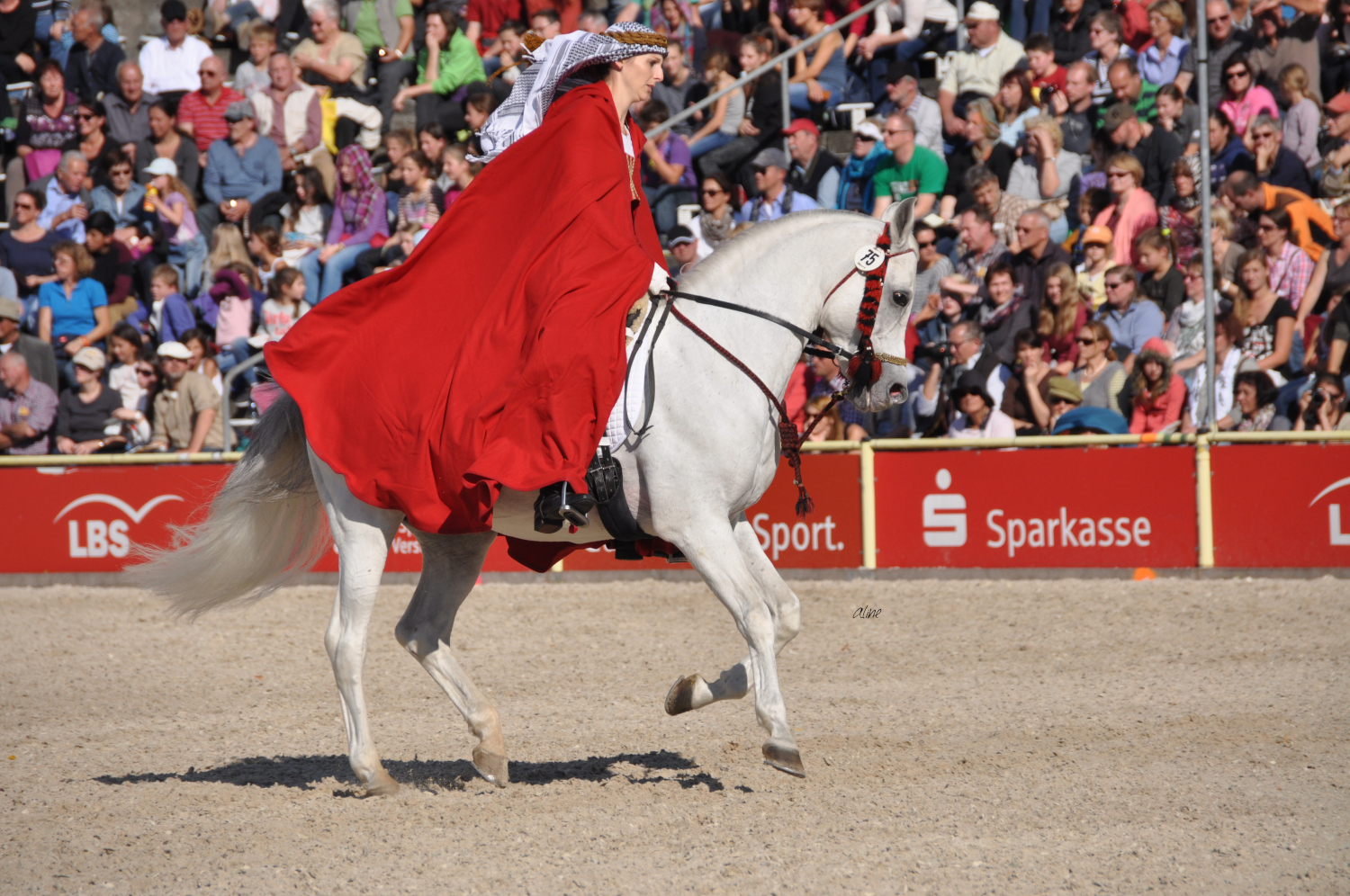
Said 1999
When the German Elite stallion Said passed away in 2020 at the age of 21, the German state stud of Marbach lost a stallion whose significance reached beyond his individual career.
Born in 1999, Said spent his entire life at the state stud in which he was bred. Standing 15.1 hands, the grey stallion combined refinement with substance, presenting a harmonious outline that reflected both Arabian nobility and practical riding horse qualities. His finely chiselled head, expressive eye and well-carried neck gave him unmistakable presence, while his correct structure, strong topline and active hindquarters provided the foundation for elastic and balanced movement. He was, in many respects, a physical expression of the Marbach breeding ideal: elegance supported by functionality.
At the centre of Said’s story stands his sire, Pamir I, a stallion who was not bred at Marbach, but whose influence on the stud would prove lasting. Bred in Germany by Margherita Hospowsky, Pamir I was introduced into the Marbach program as a carefully selected addition to the existing bloodlines. Such strategic reinforcement has long been part of Marbach’s breeding approach, combining the preservation of the historic Weil lines with the measured incorporation of compatible external influences.
Through his sire Penthagonn, a son of the Polish-bred Pasat, Pamir I carried performance-oriented bloodlines originating from the renowned Polish state studs. Pamir I's dam Shams El Inaza was by German Elite stallion Ibrahim, a Straight Egyptian paternal grandson by Hadban Enzahi. The famous Hadban Enzahi was chief sire at Marbach from his import in 1955 until his death in 1975.
Pamir I's impact is most clearly seen in his offspring. With sons such as Said and his half-brother Dschehim, Pamir I contributed significantly to the continuation of the historic Bairactar sire line, which has become increasingly rare. Equally important was his influence through his daughters. Mares such as Saabirah and Shaykah Bint Shahra were retained within the Marbach herd, where they became valuable broodmares, ensuring that his genetic contribution extended into future generations through the maternal line as well.
Equally significant was Said’s maternal background. His dam, Sadana, descended from the established Weil mare family of Jatta, tracing through Soldateska to the foundation mare Murana I. This line represents one of the enduring pillars of the Marbach Arabian, valued for its consistency in type, soundness and broodmare quality. Through Sadana, Said remained firmly anchored in the traditional genetic foundation of the stud, complementing the externally introduced influences of his sire with the continuity of a proven maternal line.
Like all chief sires at Marbach, Said underwent performance testing among warmblood stallions, where he demonstrated his versatility, with particularly strong ability in jumping. In practical use, he confirmed these qualities as a riding horse, competing at lower levels in dressage and serving as a reliable and willing partner in the training of young riders. He was also a familiar presence at the Marbach stallion parades, where his expressive movement and composure made him equally suited to dynamic ridden displays and more collected, classical presentations.
In breeding, Said was approved for a wide range of studbooks, including Arabian, Trakehner, German Sport Horse and German Riding Pony. He sired around 50 registered offspring, primarily used as a refinement sire. His progeny were valued for their type, rideability and correct conformation, achieving results up to medium level in dressage and jumping as well as in eventing. Despite his quality and distinguished pedigree, Said was used only sparingly within the purebred Arabian population and did not leave a direct successor at Marbach, nor a son to continue his line as a chief sire. His legacy, however, continues through his daughter WM Djamira (out of Dajinah), who has been incorporated into the Marbach broodmare band and produced her first foal in 2026, a colt by WM Devdas.
This absence is particularly significant given the already limited presence of the Bairactar sire line. Following the earlier loss of his half-brother Dschehim and Said’s death in 2020, this historically important lineage has become increasingly vulnerable. Its continuation now depends on only a few remaining representatives, notably WM Devdas and the young stallion WM Daraschad, alongside Shahzad by Kormant, who was leased.
Yet Said’s significance cannot be measured solely in direct succession. As a son of Pamir I and a descendant of the Weil foundation mare Murana I, he embodied the careful balance between preservation and progress that defines Marbach breeding. He stood for an Arabian horse that unites beauty with ability, and tradition with purpose.
Born in 1999, Said spent his entire life at the state stud in which he was bred. Standing 15.1 hands, the grey stallion combined refinement with substance, presenting a harmonious outline that reflected both Arabian nobility and practical riding horse qualities. His finely chiselled head, expressive eye and well-carried neck gave him unmistakable presence, while his correct structure, strong topline and active hindquarters provided the foundation for elastic and balanced movement. He was, in many respects, a physical expression of the Marbach breeding ideal: elegance supported by functionality.
At the centre of Said’s story stands his sire, Pamir I, a stallion who was not bred at Marbach, but whose influence on the stud would prove lasting. Bred in Germany by Margherita Hospowsky, Pamir I was introduced into the Marbach program as a carefully selected addition to the existing bloodlines. Such strategic reinforcement has long been part of Marbach’s breeding approach, combining the preservation of the historic Weil lines with the measured incorporation of compatible external influences.
Through his sire Penthagonn, a son of the Polish-bred Pasat, Pamir I carried performance-oriented bloodlines originating from the renowned Polish state studs. Pamir I's dam Shams El Inaza was by German Elite stallion Ibrahim, a Straight Egyptian paternal grandson by Hadban Enzahi. The famous Hadban Enzahi was chief sire at Marbach from his import in 1955 until his death in 1975.
Pamir I's impact is most clearly seen in his offspring. With sons such as Said and his half-brother Dschehim, Pamir I contributed significantly to the continuation of the historic Bairactar sire line, which has become increasingly rare. Equally important was his influence through his daughters. Mares such as Saabirah and Shaykah Bint Shahra were retained within the Marbach herd, where they became valuable broodmares, ensuring that his genetic contribution extended into future generations through the maternal line as well.
Equally significant was Said’s maternal background. His dam, Sadana, descended from the established Weil mare family of Jatta, tracing through Soldateska to the foundation mare Murana I. This line represents one of the enduring pillars of the Marbach Arabian, valued for its consistency in type, soundness and broodmare quality. Through Sadana, Said remained firmly anchored in the traditional genetic foundation of the stud, complementing the externally introduced influences of his sire with the continuity of a proven maternal line.
Like all chief sires at Marbach, Said underwent performance testing among warmblood stallions, where he demonstrated his versatility, with particularly strong ability in jumping. In practical use, he confirmed these qualities as a riding horse, competing at lower levels in dressage and serving as a reliable and willing partner in the training of young riders. He was also a familiar presence at the Marbach stallion parades, where his expressive movement and composure made him equally suited to dynamic ridden displays and more collected, classical presentations.
In breeding, Said was approved for a wide range of studbooks, including Arabian, Trakehner, German Sport Horse and German Riding Pony. He sired around 50 registered offspring, primarily used as a refinement sire. His progeny were valued for their type, rideability and correct conformation, achieving results up to medium level in dressage and jumping as well as in eventing. Despite his quality and distinguished pedigree, Said was used only sparingly within the purebred Arabian population and did not leave a direct successor at Marbach, nor a son to continue his line as a chief sire. His legacy, however, continues through his daughter WM Djamira (out of Dajinah), who has been incorporated into the Marbach broodmare band and produced her first foal in 2026, a colt by WM Devdas.
This absence is particularly significant given the already limited presence of the Bairactar sire line. Following the earlier loss of his half-brother Dschehim and Said’s death in 2020, this historically important lineage has become increasingly vulnerable. Its continuation now depends on only a few remaining representatives, notably WM Devdas and the young stallion WM Daraschad, alongside Shahzad by Kormant, who was leased.
Yet Said’s significance cannot be measured solely in direct succession. As a son of Pamir I and a descendant of the Weil foundation mare Murana I, he embodied the careful balance between preservation and progress that defines Marbach breeding. He stood for an Arabian horse that unites beauty with ability, and tradition with purpose.