Crown Of Destiny
April 10, 2026, Photo © Rosemary Archer
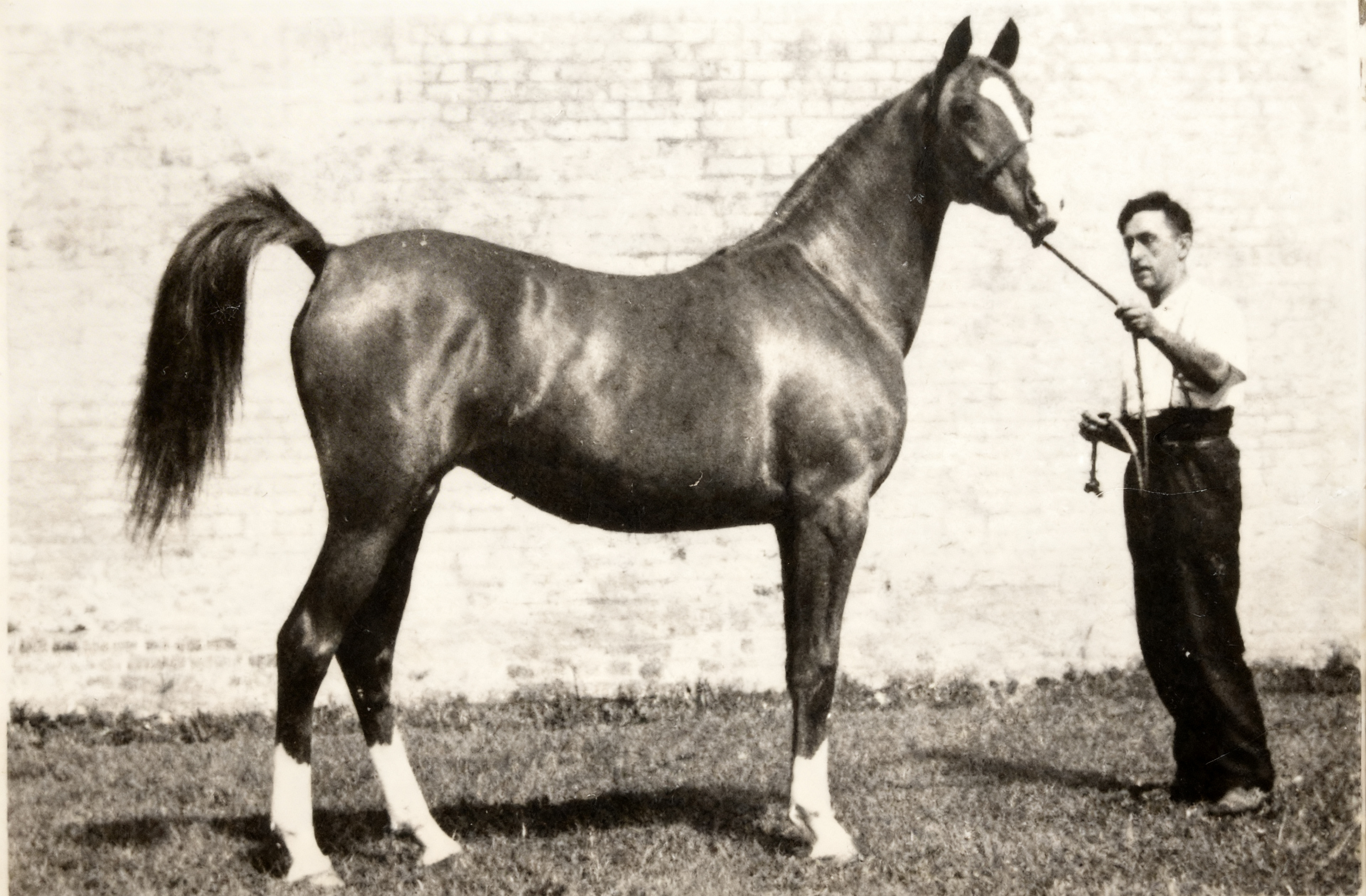
Crown Of Destiny
In 1957, Bazy Tankersley made a series of carefully considered acquisitions for her Al-Marah Arabian Stud—among them the young Crabbet-bred mare Crown of Destiny. Though not as immediately celebrated in later decades as some imported stallions, Crown of Destiny would prove to be a quietly pivotal broodmare, carrying with her a tightly concentrated and highly validated segment of late Crabbet breeding.
Bred at Crabbet Stud by Lady Wentworth, Crown of Destiny (foaled 1951) embodied the deliberate breeding strategies of the program’s final influential period. Crown of Destiny’s sire Oran (1940), bred by Lady Yule at Hanstead Stud and later owned by Lady Wentworth at Crabbet Stud, was among the last stallions to represent an almost complete concentration of original Crabbet blood. Described by stud manager Cecil Covey as “a chestnut of very rich, almost deep red… a very strong horse, with good bone and loins and a lot of presence,” Oran proved not only visually distinctive but remarkably prepotent, with his likeness evident in succeeding generations through both sons and daughters. Among his most celebrated sons was Grand Royal (out of Sharima), Supreme Male Champion at the British Nationals in 1953 and 1956, while Oran Van Crabbet (out of Serafina) became a three-time U.S. National Champion in park and driving disciplines. Through Serafina, Oran Can Crabbet was half-brother to the famous Serafix by Raktha. Equally significant were Oran’s daughters: Crown of Destiny, alongside paternal half-sisters such as Serafire—a U.S. Top Ten mare and dam of a National Champion—and Indian Diamond, an exported foundation mare in Australia, confirming his consistent transmission of both type and reproductive strength.
Crown of Destiny's dam, Grey Royal (by Raktha), belonged to a highly productive female family whose importance becomes clearer when viewed in relation to its closest relatives.
Through Grey Royal, Crown of Destiny was a full sister to Royal Diamond, a stallion who would go on to become a notable sire of champions, confirming the potency of the Oran x Grey Royal cross. Even more striking is her close relationship to Grand Royal (Oran x Sharima). This was no coincidence of isolated excellence: Grey Royal was a daughter out of Sharima, Grand Royal’s dam, placing both horses within a tightly interwoven maternal family.
Crown of Destiny’s quality was not merely theoretical. In 1953, she was named Junior Female Champion at the British National Arabian Horse Show, shown by Lady Wentworth herself.
When Crown of Destiny arrived in the United States, she entered a breeding program uniquely positioned to capitalize on such qualities. At Al-Marah, Tankersley emphasized not only type but also usability, soundness, and enduring athleticism—traits deeply aligned with Crabbet principles. Crown of Destiny’s contribution would unfold primarily through her daughters, rather than through a dominant sire line.
Her most important legacy traces through Al-Marah Crown Princess (by Indraff), who in turn produced Al-Marah Doe Fawn. This mare became a key transmitter of the line’s enduring qualities, as the dam of Baskele++ (by Bask), a U.S. Reserve National Champion in English Pleasure Driving. Through this branch, Crown of Destiny’s influence persists not in headline pedigree positions, but in the functional excellence and performance capacity of her descendants.
In this respect, Crown of Destiny exemplifies a particular kind of importance within Arabian breeding history. She was not a mare whose name dominates modern pedigrees at first glance. Instead, she represents a deeper structural influence: part of a closely related group of Crabbet horses whose collective success—in the show ring, in breeding, and in transatlantic impact—confirms the strength of their shared genetic foundation.
Bred at Crabbet Stud by Lady Wentworth, Crown of Destiny (foaled 1951) embodied the deliberate breeding strategies of the program’s final influential period. Crown of Destiny’s sire Oran (1940), bred by Lady Yule at Hanstead Stud and later owned by Lady Wentworth at Crabbet Stud, was among the last stallions to represent an almost complete concentration of original Crabbet blood. Described by stud manager Cecil Covey as “a chestnut of very rich, almost deep red… a very strong horse, with good bone and loins and a lot of presence,” Oran proved not only visually distinctive but remarkably prepotent, with his likeness evident in succeeding generations through both sons and daughters. Among his most celebrated sons was Grand Royal (out of Sharima), Supreme Male Champion at the British Nationals in 1953 and 1956, while Oran Van Crabbet (out of Serafina) became a three-time U.S. National Champion in park and driving disciplines. Through Serafina, Oran Can Crabbet was half-brother to the famous Serafix by Raktha. Equally significant were Oran’s daughters: Crown of Destiny, alongside paternal half-sisters such as Serafire—a U.S. Top Ten mare and dam of a National Champion—and Indian Diamond, an exported foundation mare in Australia, confirming his consistent transmission of both type and reproductive strength.
Crown of Destiny's dam, Grey Royal (by Raktha), belonged to a highly productive female family whose importance becomes clearer when viewed in relation to its closest relatives.
Through Grey Royal, Crown of Destiny was a full sister to Royal Diamond, a stallion who would go on to become a notable sire of champions, confirming the potency of the Oran x Grey Royal cross. Even more striking is her close relationship to Grand Royal (Oran x Sharima). This was no coincidence of isolated excellence: Grey Royal was a daughter out of Sharima, Grand Royal’s dam, placing both horses within a tightly interwoven maternal family.
Crown of Destiny’s quality was not merely theoretical. In 1953, she was named Junior Female Champion at the British National Arabian Horse Show, shown by Lady Wentworth herself.
When Crown of Destiny arrived in the United States, she entered a breeding program uniquely positioned to capitalize on such qualities. At Al-Marah, Tankersley emphasized not only type but also usability, soundness, and enduring athleticism—traits deeply aligned with Crabbet principles. Crown of Destiny’s contribution would unfold primarily through her daughters, rather than through a dominant sire line.
Her most important legacy traces through Al-Marah Crown Princess (by Indraff), who in turn produced Al-Marah Doe Fawn. This mare became a key transmitter of the line’s enduring qualities, as the dam of Baskele++ (by Bask), a U.S. Reserve National Champion in English Pleasure Driving. Through this branch, Crown of Destiny’s influence persists not in headline pedigree positions, but in the functional excellence and performance capacity of her descendants.
In this respect, Crown of Destiny exemplifies a particular kind of importance within Arabian breeding history. She was not a mare whose name dominates modern pedigrees at first glance. Instead, she represents a deeper structural influence: part of a closely related group of Crabbet horses whose collective success—in the show ring, in breeding, and in transatlantic impact—confirms the strength of their shared genetic foundation.