Gorky II
March 12, 2026, Photo © Aline Sagrabelny
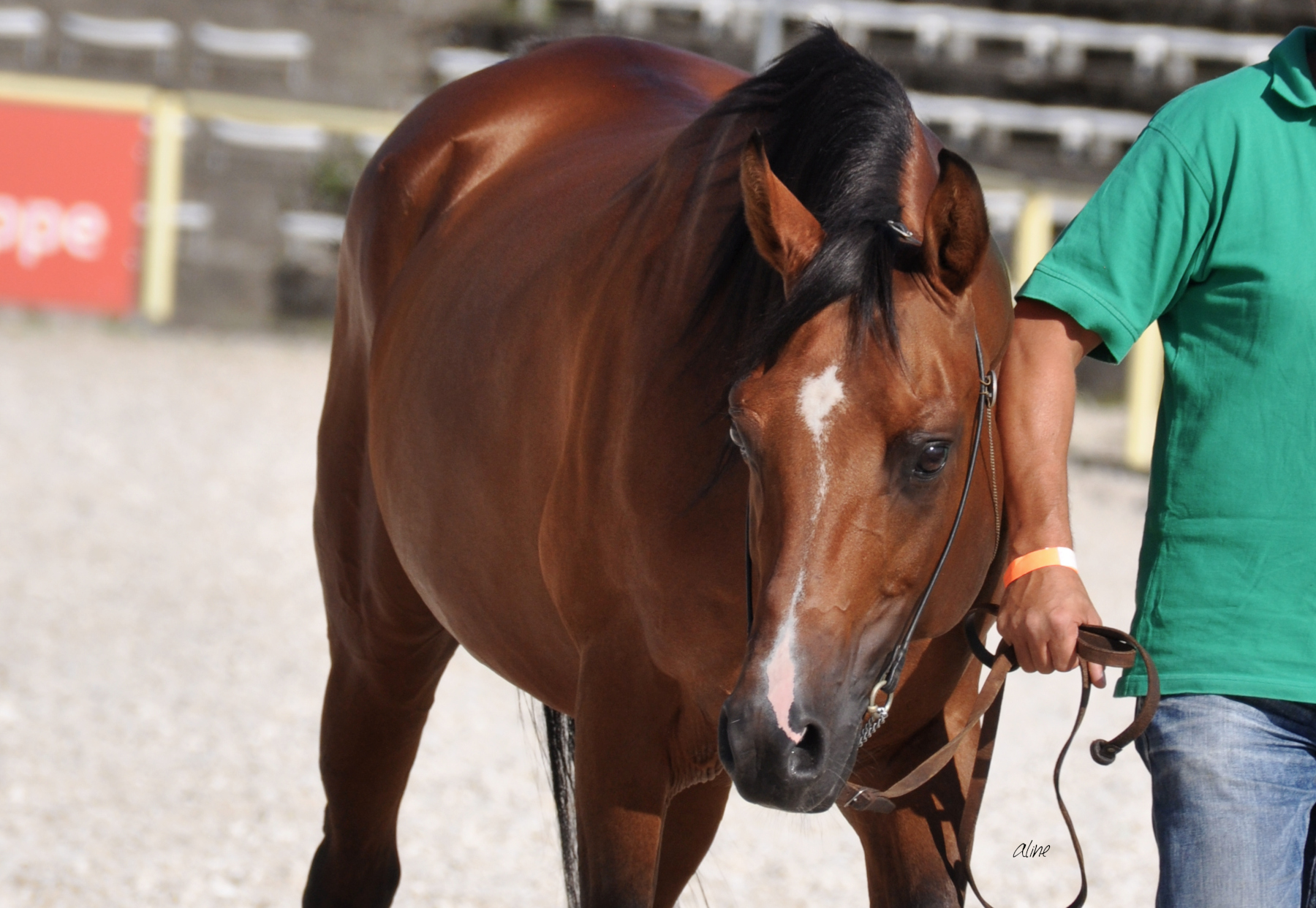
Gorky II
With the passing of Gorky II in February 2026, the European Arabian community lost not only a German Elite Stallion, but a living connection to the classical Russian Tersk breeding program. His life represented a rare continuity of performance heritage—rooted in proven racing blood, shaped by athletic functionality, and expressed through durability, versatility, and quiet strength of character.
Gorky II’s heritage began at the renowned Tersk Stud in Russia, one of the most influential state studs in the history of the Arabian breed. His dam, Partnersha, a chestnut mare foaled in 1990 by Naftalin out of Pernataya, embodied the Tersk philosophy that breeding must be validated by performance. She raced at Pyatigorsk over two seasons, starting fourteen times and earning two victories along with numerous placings. Particularly notable was her second-place finish in the Taraszcza Stakes (Gr. III C RUS) over 1800 meters, a result that demonstrated both stamina and competitiveness at a graded level. Partnersha was not a fleeting winner but a consistent, honest race mare—sound, durable, and mentally reliable. These traits would later become central to her son’s identity.
Exported in foal to the Netherlands, Partnersha carried a pregnancy by Gusar, one of Tersk’s respected racing sires. Gusar was a son by Menes. Gusar was recognized as an excellent transmitter of race ability, producing progeny that combined correct conformation with athletic balance and resilience. His offspring were exported throughout Europe, and several half-siblings of Gorky II, among them Prognoz (x Primeta) or Kingsayz (x Katrinka) established themselves in breeding and sport, reinforcing the consistency of the sire line.
Foaled in 1995 at Umkirch in Germany and raised by the Fath family, Gorky II followed the classical path expected of a well-bred Russian Arabian stallion. He was entered into the studbook at three years of age and soon began his racing career. Between the ages of four and six he contested seventeen races, often facing strong French competition, and accumulated 378 lifetime racing points. He retired sound, an achievement that in itself speaks to the strength of his genetic foundation. His career then transitioned seamlessly into endurance sport, where over seven years he completed ten rides totaling 641 kilometers, including a second-place finish in a CEI** ride at a regional championships. The progression from racetrack to endurance course reflected precisely the qualities his pedigree promised: stamina, recovery ability, and mental steadiness.
Gorky II's conformation exemplified the functional Russian type. He possessed a well-set neck emerging from a deep, correctly angled shoulder, a strong and compact topline, and well-developed hindquarters capable of generating sustained impulsion. His limbs were dry and correct, with adequate bone and clean joints—attributes essential for longevity in both racing and endurance. His overall impression was one of harmony and athletic purpose rather than exaggeration. Observers often remarked on his elasticity in motion and his remarkable ability to relax after exertion, a mental quality as valuable as any physical trait. In 2017, his lifetime performance and breeding influence were formally recognized when he was named a German Elite Stallion. This distinction acknowledged not only his own achievements but also the quality he transmitted.
Although he did not sire large numbers of foals, the impact of his progeny has been meaningful. His offspring FF Granada, FF Gesha, and FF Penza all demonstrated clear aptitude for endurance sport and were awarded premium status, indicating both structural quality and performance potential. Their consistent inclination toward stamina and resilience suggests that Gorky II reliably transmitted the durability inherited from both Gusar and Partnersha. Internationally, his daughter Lenya, bred in France from Ladoga Tersk, represents the continued integration of this Tersk-derived heritage into modern European breeding programs.
Beyond measurable achievements, Gorky II’s legacy also lies in his versatility. He was not confined to the racetrack or competition arena but served as a riding horse, hunting partner, and even a vaulting horse, introducing children to Arabian horses and acting as an ambassador for the breed. Such adaptability underscores the structural correctness and stable temperament deeply embedded in his lineage.
Gorky II lived to more than thirty years of age, a testament to the robustness that defined his family. In him converged the race-tested strength of Partnersha, the proven sire power of Gusar, and the enduring philosophy of Tersk breeding: that beauty must serve function, and pedigree must be proven in work.
Gorky II’s heritage began at the renowned Tersk Stud in Russia, one of the most influential state studs in the history of the Arabian breed. His dam, Partnersha, a chestnut mare foaled in 1990 by Naftalin out of Pernataya, embodied the Tersk philosophy that breeding must be validated by performance. She raced at Pyatigorsk over two seasons, starting fourteen times and earning two victories along with numerous placings. Particularly notable was her second-place finish in the Taraszcza Stakes (Gr. III C RUS) over 1800 meters, a result that demonstrated both stamina and competitiveness at a graded level. Partnersha was not a fleeting winner but a consistent, honest race mare—sound, durable, and mentally reliable. These traits would later become central to her son’s identity.
Exported in foal to the Netherlands, Partnersha carried a pregnancy by Gusar, one of Tersk’s respected racing sires. Gusar was a son by Menes. Gusar was recognized as an excellent transmitter of race ability, producing progeny that combined correct conformation with athletic balance and resilience. His offspring were exported throughout Europe, and several half-siblings of Gorky II, among them Prognoz (x Primeta) or Kingsayz (x Katrinka) established themselves in breeding and sport, reinforcing the consistency of the sire line.
Foaled in 1995 at Umkirch in Germany and raised by the Fath family, Gorky II followed the classical path expected of a well-bred Russian Arabian stallion. He was entered into the studbook at three years of age and soon began his racing career. Between the ages of four and six he contested seventeen races, often facing strong French competition, and accumulated 378 lifetime racing points. He retired sound, an achievement that in itself speaks to the strength of his genetic foundation. His career then transitioned seamlessly into endurance sport, where over seven years he completed ten rides totaling 641 kilometers, including a second-place finish in a CEI** ride at a regional championships. The progression from racetrack to endurance course reflected precisely the qualities his pedigree promised: stamina, recovery ability, and mental steadiness.
Gorky II's conformation exemplified the functional Russian type. He possessed a well-set neck emerging from a deep, correctly angled shoulder, a strong and compact topline, and well-developed hindquarters capable of generating sustained impulsion. His limbs were dry and correct, with adequate bone and clean joints—attributes essential for longevity in both racing and endurance. His overall impression was one of harmony and athletic purpose rather than exaggeration. Observers often remarked on his elasticity in motion and his remarkable ability to relax after exertion, a mental quality as valuable as any physical trait. In 2017, his lifetime performance and breeding influence were formally recognized when he was named a German Elite Stallion. This distinction acknowledged not only his own achievements but also the quality he transmitted.
Although he did not sire large numbers of foals, the impact of his progeny has been meaningful. His offspring FF Granada, FF Gesha, and FF Penza all demonstrated clear aptitude for endurance sport and were awarded premium status, indicating both structural quality and performance potential. Their consistent inclination toward stamina and resilience suggests that Gorky II reliably transmitted the durability inherited from both Gusar and Partnersha. Internationally, his daughter Lenya, bred in France from Ladoga Tersk, represents the continued integration of this Tersk-derived heritage into modern European breeding programs.
Beyond measurable achievements, Gorky II’s legacy also lies in his versatility. He was not confined to the racetrack or competition arena but served as a riding horse, hunting partner, and even a vaulting horse, introducing children to Arabian horses and acting as an ambassador for the breed. Such adaptability underscores the structural correctness and stable temperament deeply embedded in his lineage.
Gorky II lived to more than thirty years of age, a testament to the robustness that defined his family. In him converged the race-tested strength of Partnersha, the proven sire power of Gusar, and the enduring philosophy of Tersk breeding: that beauty must serve function, and pedigree must be proven in work.