Rose of Sharon
February 14, 2026, Photo archive
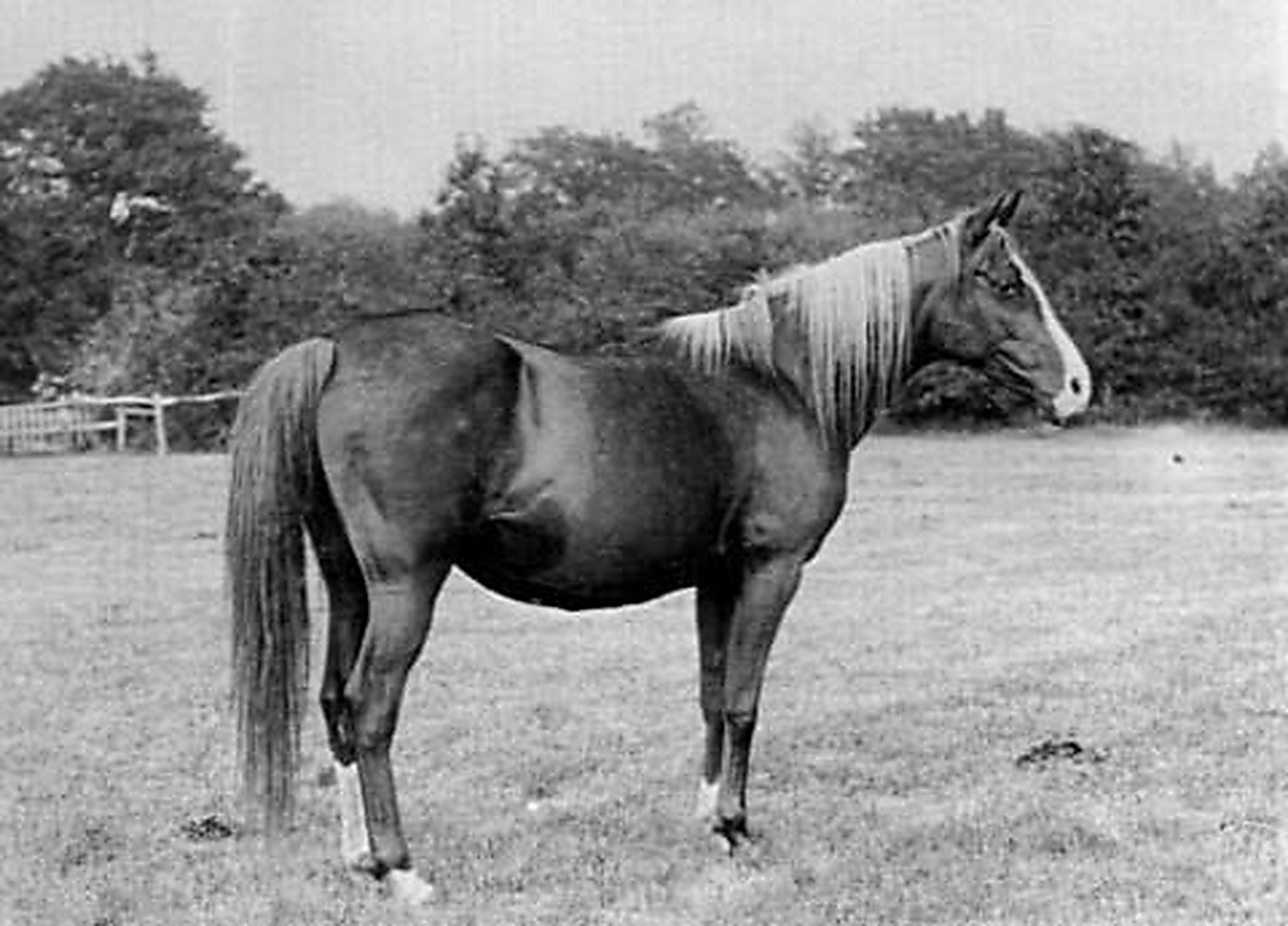
Rose of Sharon
The chestnut mare Rose of Sharon was foaled in 1885 at Crabbet Park, England. Her breeders, Wilfred and Lady Anne Blunt, obtained desert-bred horses directly from Bedouin sources, as cornerstone of their breeding programs. In 1883, they claimed the desert bred stallion Hadban, the sire of Rose of Sharon, a Straight Egyptian stallion who was imported to Bombay, India, in the autumn of 1883 by Shaykh Ali Ibn Amr. In the year of Rose of Sharon's birth, Hadban was sold to Mr. D. Mackay of Australia.
Her dam, the desert-bred mare Rodania, stands as one of the most important foundation mares in the history of Crabbet Park and, indeed, of Arabian breeding worldwide. Rodania founded an extensive and enduring family that would influence numerous breeding programs across continents.
Rose of Sharon remained part of the Crabbet breeding program almost during her entire life and became one of the stud’s most valuable broodmares. Her significance expanded internationally when she was imported to the United States at the age of 20 in 1905 by Spencer Borden for his Interlachen Stud in Fall River, Massachusetts. At the time of her importation, she was in foal to Harb, a son of the influential Crabbet stallion Mesaoud, reinforcing the concentration of key Crabbet bloodlines within her produce.
In 1906, Rose of Sharon produced her son Rodan, her only colt foaled in the United States. The following year she produced the mare Rosa Rugosa, bred by Borden, who would become another important contributor to early American Arabian breeding. Between 1890 and 1907, Rose of Sharon produced thirteen registered purebred Arabian foals, several of which became foundation horses whose descendants shaped numerous breeding programs and established enduring mare and sire lines.
Among her most historically important offspring was Ridaa (1892, by Merzuk). Ridaa became the dam of several influential horses, including Riyala, Rissla, Rim, and the stallion Rustem, later owned by Prince Kemal ed Dine in Egypt. Riyala and Rissla each founded long-lasting mare families, while Rim produced several prominent stallions. She was the dam of Raswan (by Skowronek), known for his refinement and historical significance. She also produced Rissam, a sire at Hanstead Stud in England and Raseem, sire of notable horses such as Astrella and Indian Fire. Rim's daughter mare Rifla was later imported to the United States by W.K. Kellogg where she produced Rifnas, a well-trained riding stallion.
The stallion Rijm (1901, by Mahruss II) further extended Rose of Sharon’s influence. He became the sire of Nureddinn II, an important breeding stallion at Selby Stud, and Nasik, who contributed to the W.K. Kellogg Arabian Stud program in California. Rijm himself was widely admired for his quality and presence.
Through Rodan, Rose of Sharon’s legacy expanded significantly in American breeding. Rodan sired Gulnare, a distinguished broodmare who produced Gulastra and Gharifet, as well as Bazrah, a prolific and highly regarded broodmare noted for her excellent conformation and temperament. Rodan’s most influential son, Ghazi, became a major sire at William Randolph Hearst’s Sunical Land at San Simeon, California, transmitting strong Arabian type and overall quality.
Rosa Rugosa also made an enduring contribution through her son Sidi, one of the important early Arabian sires in the United States. Sidi transmitted balance, strong conformation, superior movement, and classic Arabian type, producing numerous successful descendants and reinforcing the early American Arabian breeding foundation.
In addition to her genetic impact, Rose of Sharon was admired for her distinctive golden chestnut coat, often accompanied by a flaxen mane and tail and prominent white markings.
Rose of Sharon’s lasting importance lies in her role as a principal transmitter of Rodania’s powerful female line and as a consolidator of Crabbet breeding ideals. Through her extensive and influential descendants, she contributed significantly to the establishment and development of Arabian breeding programs in Europe, Egypt, and North America
Her dam, the desert-bred mare Rodania, stands as one of the most important foundation mares in the history of Crabbet Park and, indeed, of Arabian breeding worldwide. Rodania founded an extensive and enduring family that would influence numerous breeding programs across continents.
Rose of Sharon remained part of the Crabbet breeding program almost during her entire life and became one of the stud’s most valuable broodmares. Her significance expanded internationally when she was imported to the United States at the age of 20 in 1905 by Spencer Borden for his Interlachen Stud in Fall River, Massachusetts. At the time of her importation, she was in foal to Harb, a son of the influential Crabbet stallion Mesaoud, reinforcing the concentration of key Crabbet bloodlines within her produce.
In 1906, Rose of Sharon produced her son Rodan, her only colt foaled in the United States. The following year she produced the mare Rosa Rugosa, bred by Borden, who would become another important contributor to early American Arabian breeding. Between 1890 and 1907, Rose of Sharon produced thirteen registered purebred Arabian foals, several of which became foundation horses whose descendants shaped numerous breeding programs and established enduring mare and sire lines.
Among her most historically important offspring was Ridaa (1892, by Merzuk). Ridaa became the dam of several influential horses, including Riyala, Rissla, Rim, and the stallion Rustem, later owned by Prince Kemal ed Dine in Egypt. Riyala and Rissla each founded long-lasting mare families, while Rim produced several prominent stallions. She was the dam of Raswan (by Skowronek), known for his refinement and historical significance. She also produced Rissam, a sire at Hanstead Stud in England and Raseem, sire of notable horses such as Astrella and Indian Fire. Rim's daughter mare Rifla was later imported to the United States by W.K. Kellogg where she produced Rifnas, a well-trained riding stallion.
The stallion Rijm (1901, by Mahruss II) further extended Rose of Sharon’s influence. He became the sire of Nureddinn II, an important breeding stallion at Selby Stud, and Nasik, who contributed to the W.K. Kellogg Arabian Stud program in California. Rijm himself was widely admired for his quality and presence.
Through Rodan, Rose of Sharon’s legacy expanded significantly in American breeding. Rodan sired Gulnare, a distinguished broodmare who produced Gulastra and Gharifet, as well as Bazrah, a prolific and highly regarded broodmare noted for her excellent conformation and temperament. Rodan’s most influential son, Ghazi, became a major sire at William Randolph Hearst’s Sunical Land at San Simeon, California, transmitting strong Arabian type and overall quality.
Rosa Rugosa also made an enduring contribution through her son Sidi, one of the important early Arabian sires in the United States. Sidi transmitted balance, strong conformation, superior movement, and classic Arabian type, producing numerous successful descendants and reinforcing the early American Arabian breeding foundation.
In addition to her genetic impact, Rose of Sharon was admired for her distinctive golden chestnut coat, often accompanied by a flaxen mane and tail and prominent white markings.
Rose of Sharon’s lasting importance lies in her role as a principal transmitter of Rodania’s powerful female line and as a consolidator of Crabbet breeding ideals. Through her extensive and influential descendants, she contributed significantly to the establishment and development of Arabian breeding programs in Europe, Egypt, and North America