Razada
January 30, 2026, Photo archive
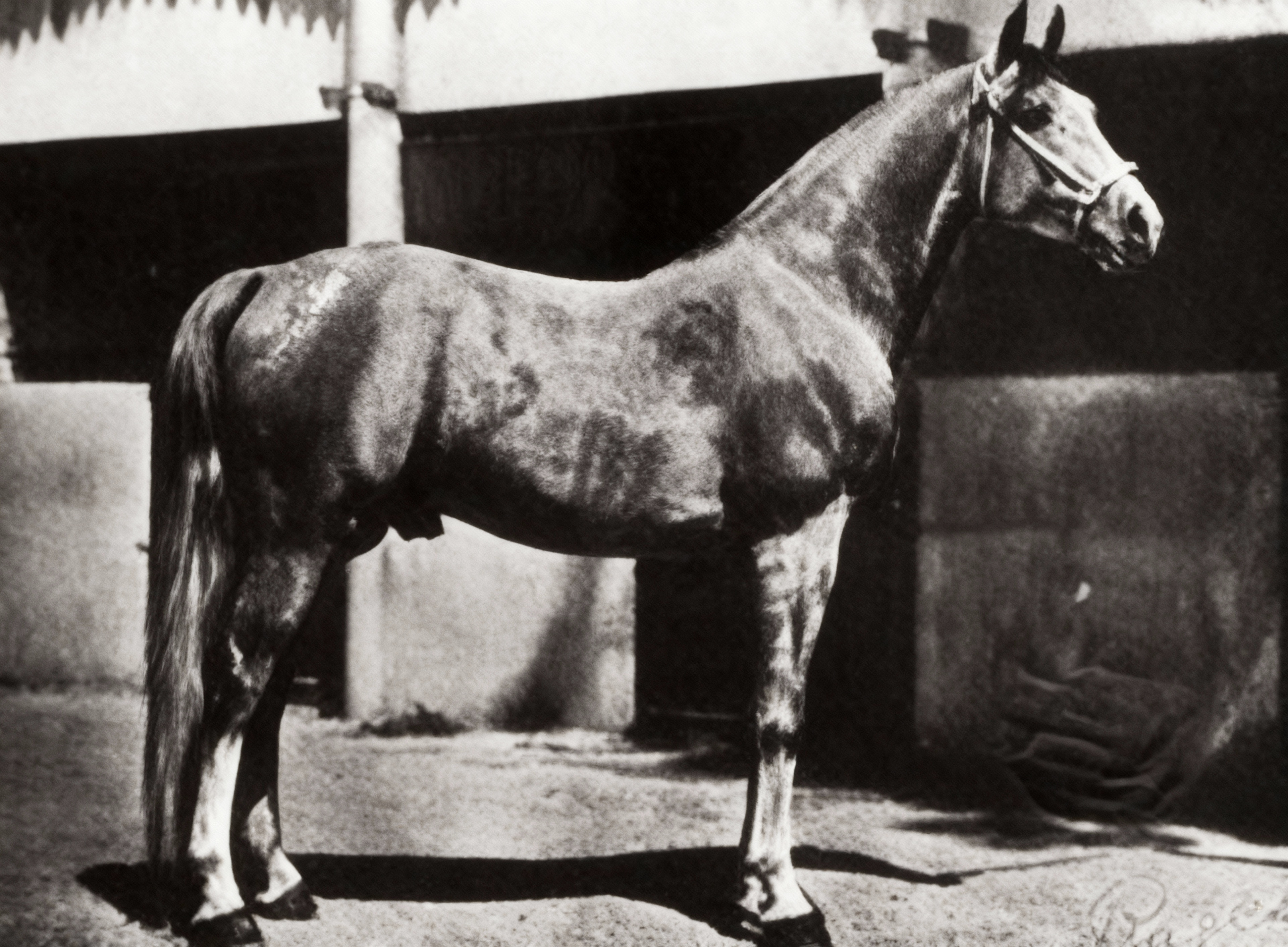
Razada
When Cristóbal Colón y Aguilera, 15th Duke of Veragua, began assembling his Arabian breeding program, he sought stallions that could unite desert authenticity, classic type and the commanding presence. Among the horses imported from England in 1926, the grey stallion Razada—exported together with his dam Ranya—stood out as a particularly compelling acquisition. Bred in England by Cecil Hough, Razada combined an illustrious pedigree with an imposing character and classic Arabian type, qualities that would soon place him at the center of Veragua’s ambitions for Spanish Arabian breeding. Though his life was brief and ended tragically during the Spanish Civil War, Razada remains a striking example of how individual horses became entwined with the larger historical forces shaping European Arabian breeding in the early twentieth century.
He was sired by Shahzada (Mootrub x Ruth Kesia), a grey stallion of upright, commanding build who achieved remarkable success as a show horse, winning Champion Arab eight times at the Sydney Royal Show between 1926 and 1933 after his export to Australia. Shahzada carried approximately 25% Crabbet blood.
Shahzada’s sire, Mootrub, was a chestnut Saqlawi Jedran stallion foaled in 1887 and bred in the desert. A celebrated racehorse, Mootrub was purchased in India by General Sir John Hills, where he won numerous races before being imported from Calcutta to England in 1891. Razada’s paternal granddam, Ruth Kesia, was by Ben Azrek, a 100% Crabbet-bred stallion, making Ruth Kesia herself 50% Crabbet and reinforcing the stud’s hallmark blend of desert authenticity and selective refinement.
On the maternal side, there stands Ranya (Nasik x Riyala), a grey mare bred at Crabbet Park and traced directly to Rodania, the desert-bred foundation mare whose influence permeates Crabbet breeding worldwide. Ranya was a maternal sister to Razina, a foundation mare of Hanstead Stud, and the dam of Ranya II by Redif, who continued the line. Another daughter, Miriam by Nadir, was exported to Australia, extending Ranya’s influence far beyond England. Razada’s full sister Shahradie, however, left no registered offspring.
In Spain, Razada entered the program of the Duke of Veragua (1878–1936), one of the most knowledgeable and ambitious Arabian breeders of his time. A descendant of Christopher Columbus, the Duke did not begin breeding purebred Arabians until 1926, yet rapidly distinguished himself through discerning acquisitions and an uncompromising pursuit of excellence. He famously declared that “the breeding of Arabian horses is a glorious task,” and spared no expense in assembling elite stock from Crabbet Park, France and the best Spanish herds.
Razada became one of Veragua’s senior sires at Valjuanete. At Valjuanete, Razada left his most notable offspring in the form of two stallions, Kashmir and Nana Sahib, both foaled in 1934.
Kashmir, a grey stallion out of the Skowronek daughter Reyna, was sold to the Yeguada Militar in 1937, where he remained in service until his death in 1953. Over the course of his breeding career he sired a total of 88 foals, several of which played an important role in the preservation and dissemination of his line. Among his daughters, Kayan (out of Sara III) merits particular attention. The grey Kayan became the dam of Batista, whose daughters Prometida, Candela, and Rumbosa carried Kashmir’s influence beyond Spain. Prometida, in particular, became a foundation mare at Om El Arab in Germany, establishing a lasting continental branch of the line.
Kayan also produced the outstanding broodmare Arilla by Malvito, herself grey, whose significance lies in the exceptional quality of her offspring. Arilla was the dam of several highly influential stallions, including Rastano and Pintor (both by Jaguay), Uranio (by Zagal) and Latino (by Figuroso).
Even more far-reaching was the legacy of Nana Sahib, a grey stallion out of Jalila, another Skowronek daughter. Nana Sahib distinguished himself not only as a sire, but particularly as an exceptional broodmare sire, a role in which his influence proved profound and enduring. Among his most important daughters was Egina, whose significance rests in her production of Jaecero and Malvito, both of whom became chief sires at the Yeguada Militar and exerted widespread influence over subsequent generations of Spanish Arabians.
His daughter Famula became the dam of Maquillo by Gandhy, himself a stallion of considerable importance, reinforcing Nana Sahib’s role in the transmission of quality through both male and female lines. After Famula was sold to Mr. Osuna, she produced Agata III, a mare later exported to the United States, thus extending Razada’s legacy beyond Europe. In the US, Agata III produced Talagato by Talal.
Another Nana Sahib daughter, Jabonera, produced Sacudir, whose importance was further amplified through his role as the paternal grandsire of Marhaba.
The bay stallion Marhaba (by Nagasaki, by Sacudir) achieved international recognition as Reserve Champion Stallion at the Salon du Cheval in Paris before his export to the United States.
Last but not least, there is Nana Sahib's daughter Kantista who was the dam of Alhabac (by Cairel). Alhabac's daughter Ispahan became the dam of An Malik.
Razada was trained in Haute École, and contemporary accounts emphasize his extraordinary presence and commanding charisma. He was, however, a stallion of strong temper, intolerant of careless handling and not a horse for everyone. In the turmoil that followed, his unyielding temperament became a fatal liability.
Razada’s life and career were brutally cut short by the outbreak of the Spanish Civil War in 1936. When Valjuanete was expropriated, soldiers were unable to manage the powerful stallion. In a grim and senseless act, Razada was shot by a soldier, becoming one of countless irreplaceable losses inflicted upon Spain’s Arabian horse population during the conflict. The Duke of Veragua himself was killed, too, breeding records were destroyed, and much of his carefully assembled legacy was scattered or erased.
Yet Razada’s genetic influence did not vanish with him. Especially through his son Nana Sahib, Razada became a pivotal contributor to what later emerged as the modern “Spanish family.” His story embodies both the heights of early twentieth-century Arabian breeding and the devastating fragility of that achievement in times of war—a reminder that the history of the Arabian horse is inseparable from the history of the people who bred, cherished, and too often lost them.
He was sired by Shahzada (Mootrub x Ruth Kesia), a grey stallion of upright, commanding build who achieved remarkable success as a show horse, winning Champion Arab eight times at the Sydney Royal Show between 1926 and 1933 after his export to Australia. Shahzada carried approximately 25% Crabbet blood.
Shahzada’s sire, Mootrub, was a chestnut Saqlawi Jedran stallion foaled in 1887 and bred in the desert. A celebrated racehorse, Mootrub was purchased in India by General Sir John Hills, where he won numerous races before being imported from Calcutta to England in 1891. Razada’s paternal granddam, Ruth Kesia, was by Ben Azrek, a 100% Crabbet-bred stallion, making Ruth Kesia herself 50% Crabbet and reinforcing the stud’s hallmark blend of desert authenticity and selective refinement.
On the maternal side, there stands Ranya (Nasik x Riyala), a grey mare bred at Crabbet Park and traced directly to Rodania, the desert-bred foundation mare whose influence permeates Crabbet breeding worldwide. Ranya was a maternal sister to Razina, a foundation mare of Hanstead Stud, and the dam of Ranya II by Redif, who continued the line. Another daughter, Miriam by Nadir, was exported to Australia, extending Ranya’s influence far beyond England. Razada’s full sister Shahradie, however, left no registered offspring.
In Spain, Razada entered the program of the Duke of Veragua (1878–1936), one of the most knowledgeable and ambitious Arabian breeders of his time. A descendant of Christopher Columbus, the Duke did not begin breeding purebred Arabians until 1926, yet rapidly distinguished himself through discerning acquisitions and an uncompromising pursuit of excellence. He famously declared that “the breeding of Arabian horses is a glorious task,” and spared no expense in assembling elite stock from Crabbet Park, France and the best Spanish herds.
Razada became one of Veragua’s senior sires at Valjuanete. At Valjuanete, Razada left his most notable offspring in the form of two stallions, Kashmir and Nana Sahib, both foaled in 1934.
Kashmir, a grey stallion out of the Skowronek daughter Reyna, was sold to the Yeguada Militar in 1937, where he remained in service until his death in 1953. Over the course of his breeding career he sired a total of 88 foals, several of which played an important role in the preservation and dissemination of his line. Among his daughters, Kayan (out of Sara III) merits particular attention. The grey Kayan became the dam of Batista, whose daughters Prometida, Candela, and Rumbosa carried Kashmir’s influence beyond Spain. Prometida, in particular, became a foundation mare at Om El Arab in Germany, establishing a lasting continental branch of the line.
Kayan also produced the outstanding broodmare Arilla by Malvito, herself grey, whose significance lies in the exceptional quality of her offspring. Arilla was the dam of several highly influential stallions, including Rastano and Pintor (both by Jaguay), Uranio (by Zagal) and Latino (by Figuroso).
Even more far-reaching was the legacy of Nana Sahib, a grey stallion out of Jalila, another Skowronek daughter. Nana Sahib distinguished himself not only as a sire, but particularly as an exceptional broodmare sire, a role in which his influence proved profound and enduring. Among his most important daughters was Egina, whose significance rests in her production of Jaecero and Malvito, both of whom became chief sires at the Yeguada Militar and exerted widespread influence over subsequent generations of Spanish Arabians.
His daughter Famula became the dam of Maquillo by Gandhy, himself a stallion of considerable importance, reinforcing Nana Sahib’s role in the transmission of quality through both male and female lines. After Famula was sold to Mr. Osuna, she produced Agata III, a mare later exported to the United States, thus extending Razada’s legacy beyond Europe. In the US, Agata III produced Talagato by Talal.
Another Nana Sahib daughter, Jabonera, produced Sacudir, whose importance was further amplified through his role as the paternal grandsire of Marhaba.
The bay stallion Marhaba (by Nagasaki, by Sacudir) achieved international recognition as Reserve Champion Stallion at the Salon du Cheval in Paris before his export to the United States.
Last but not least, there is Nana Sahib's daughter Kantista who was the dam of Alhabac (by Cairel). Alhabac's daughter Ispahan became the dam of An Malik.
Razada was trained in Haute École, and contemporary accounts emphasize his extraordinary presence and commanding charisma. He was, however, a stallion of strong temper, intolerant of careless handling and not a horse for everyone. In the turmoil that followed, his unyielding temperament became a fatal liability.
Razada’s life and career were brutally cut short by the outbreak of the Spanish Civil War in 1936. When Valjuanete was expropriated, soldiers were unable to manage the powerful stallion. In a grim and senseless act, Razada was shot by a soldier, becoming one of countless irreplaceable losses inflicted upon Spain’s Arabian horse population during the conflict. The Duke of Veragua himself was killed, too, breeding records were destroyed, and much of his carefully assembled legacy was scattered or erased.
Yet Razada’s genetic influence did not vanish with him. Especially through his son Nana Sahib, Razada became a pivotal contributor to what later emerged as the modern “Spanish family.” His story embodies both the heights of early twentieth-century Arabian breeding and the devastating fragility of that achievement in times of war—a reminder that the history of the Arabian horse is inseparable from the history of the people who bred, cherished, and too often lost them.