Forta
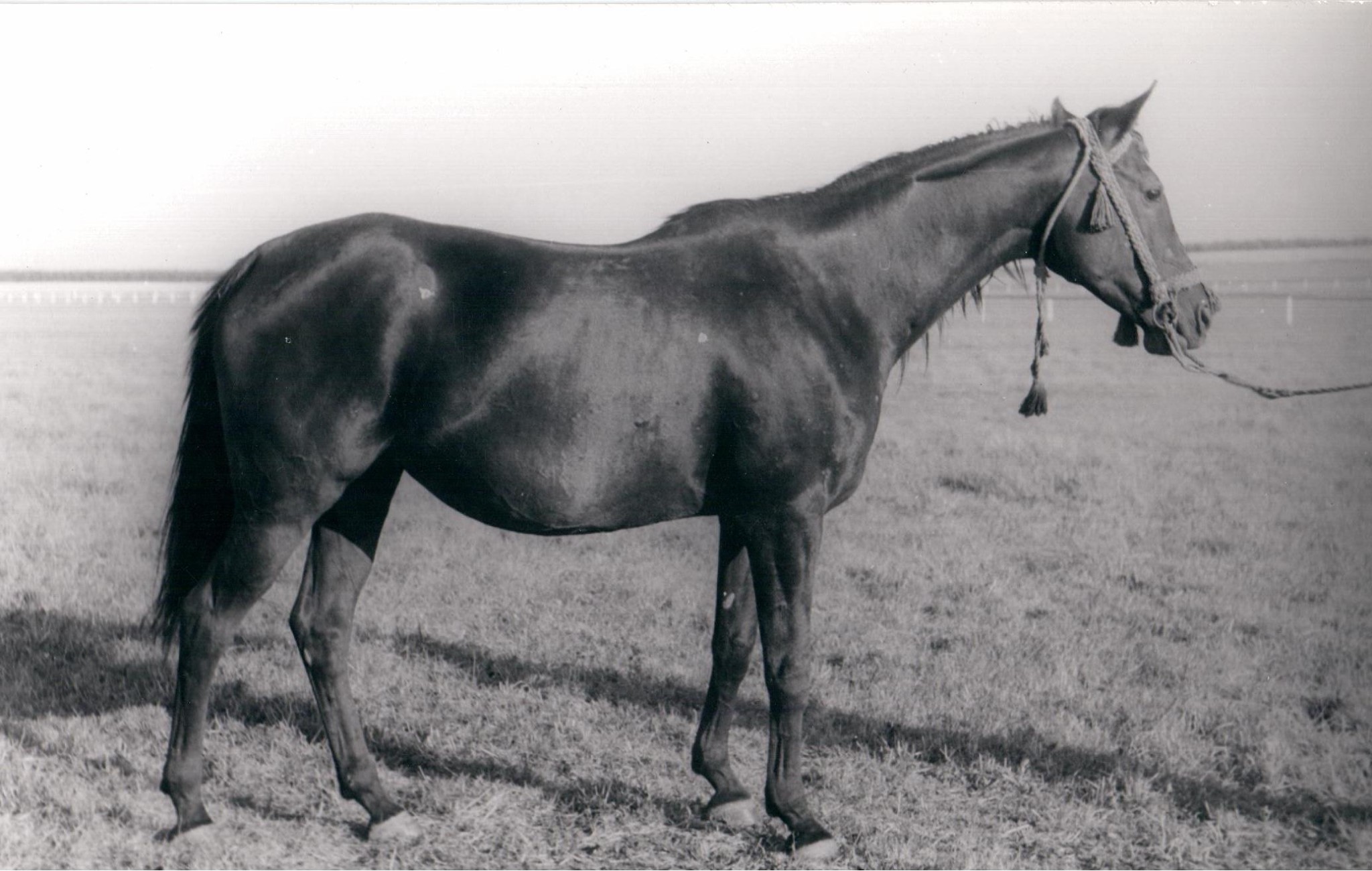
Photo archive
Horse Information
- Sex: mare
- Color: bay
- Born: 1943
- Died: 1970
- Reg#: PASB 1056
Pedigree
- Sire: Kuhailan Abu Urkub
- Dam: Porta
- Sire Line: Kuhailan Zaid db
- Dam Line: Ukrainka
- Branch: n/a
- Strain: not known
Additional Information
well-known for her good legs; produced successful horses like Flis, Fortel, Czort or Equifor
Breeder
Gumniska Stud (Prince Roman Sanguszko)
Poland
About Forta
Foaled in 1943 at the historic Gumniska stud of Prince Roman Sanguszko, Forta stands as one of the quietly decisive matrons of post-war Polish Arabian breeding. A bay mare of strong type and athletic ability, she was born at a turning point in history. The devastation of World War II threatened the survival of many of Poland’s oldest Arabian families. Through Forta, one of those ancient female lines not only survived — it flourished.
Forta was sired by Kuhailan Abu Urkub, a son of the desert-bred Kuhailan Zaid. Kuhailan Zaid, imported to Central Europe in the early twentieth century, became the founder of a respected Kuhailan sire line in Poland and neighboring breeding programs. The Kuhailan strain was long prized among Bedouin breeders for transmitting strength, endurance, and masculine elegance. Although Kuhailan Abu Urkub’s life and direct stud career were curtailed by the turmoil of World War II, his genetic legacy endured through a number of influential offspring.
Among them was Forta herself, but also her paternal half-sister Salwa (out of Sabda). Salwa belonged to a mare family known for producing successful racehorses and became a highly significant broodmare. Her son Salto by Bad Afas, born 1952, was winner of the Stakes. Her daughter Salinaa by Comet became broodmare at Ed Tweed's Brusally Ranch in Arizona. Another daughter, the grey Szarza, sired by Ali Said, proved especially influential. Exported to the United States in 1961, Szarza produced the stallion Amerigo by Ferseyn, who in turn became the sire of the internationally famous Khemosabi (out of Furneeka), one of the most celebrated Arabian sires in American breeding history. Szarza also produced the stallion Corsair, himself the sire of around 150 registered foals.
Salwa’s influence extended beyond the United States as well. Her daughter Salome, foaled at Nowy Dwór in Poland, was exported to France in 1966, where she contributed to the spread of Kuhailan Abu Urkub’s bloodline in French Arabian breeding.
On her dam side, Forta descended from Porta of the historic Ukrainka family, tracing back to the Slawuta breeding of the early nineteenth century. This female line, already rare by the 1940s, gained renewed importance through Forta’s daughters and granddaughters.
On her dam side, Forta descended from Porta of the historic Ukrainka female family, a line tracing back to the renowned Slawuta breeding of the early nineteenth century. This family represented one of the oldest and most respected Polish Arabian mare lines, valued for producing hardy, athletic horses well suited to both racing and breeding.
Porta herself was sired by Nedjari, a stallion foaled in France in 1926. Nedjari was by the desert-bred Nibeh and out of Nedjarine by Danbik. In 1929 he was acquired by Prince Roman Sanguszko for the Gumniska stud in Poland.
Porta herself produced five foals—three colts and two fillies—among them Forta. Another daughter, Zbroja (by Kartoum), illustrates the turbulent fate of many Polish breeding families during the Second World War. Zbroja produced only one daughter, the bay mare Europa, before both Zbroja and her dam Porta were lost during the war.
Europa, however, survived and eventually reached Germany, where she continued the family line. She produced the mare Dzika by Ghazal, later exported to the United States, and another daughter, Kismet, who became a broodmare at the stud of Alfred Leonberger in Germany.
By the mid-twentieth century this female line was rare, but through Forta it regained vitality and influence in Polish state studs. Forta herself was remembered as a well-balanced mare with particularly strong and correct legs, a trait highly valued in Arabian breeding and one that undoubtedly contributed to the athletic ability seen in many of her descendants.
Her importance soon became evident through the quality of her progeny, several of whom played notable roles in post-war breeding. Among Forta’s most important offspring was Czort (by Wielki Szlem), born in 1949.
Bred at Nowy Dwór, Poland, the bay Czort was an outstanding racehorse, winning 13 of 19 starts, before serving as a chief sire in Poland for many seasons. Through him, Forta’s branch of the Ukrainka family became firmly established in post-war breeding. Czort transmitted athleticism, substance, and strong Polish type, reinforcing the dual emphasis on performance and beauty that characterizes the breed.
Among her sons was Equifor (by Amurath Sahib), who demonstrated exceptional racing ability. In 1955 he set a speed record for the Polish Arabian Derby, highlighting the performance strength carried by Forta’s family.
Another son, the black Fortel by Como, also contributed to breeding both within and beyond Poland, helping extend Forta’s genetic reach internationally.
Forta’s daughters played an equally crucial role in establishing the long-term influence of her family. Fatma became one of the elite mares of the Michalow broodmare band. She produced the stallion Fawor (by Probat), who achieved remarkable success: Polish National, European, and World Junior Champion Stallion in 1983 and Polish National Senior Champion Stallion in 1990. Fawor later became a successful breeding stallion in both Poland and the United States. Another daughter, Fortunata, produced the stallion Figaro, a highly regarded breeding stallion used in Sweden and later in the United States. Through these descendants, Forta’s maternal line spread into international breeding programs.
Another important branch of Forta’s family descends from her daughter Forsycja (by Como). Forsycja's notable daughter Forcja became an important link in continuing this branch of the family. Forcja produced the mare Felluka, who carried the Forta family forward at Michalów Stud. Forcja was also the dam of Fuksja, who was exported to Sweden in 1965 and became a broodmare at the Blommeröd Stud. Through Fuksja, the Forta family established an important Scandinavian branch. She produced the stallion Darfas (by Dardir), who achieved notable success in Scandinavia, winning Best in Show in Denmark in 1978 and Best in Show in Sweden in 1979. Darfas later received Swedish breeding premiums and also placed in show jumping classes, illustrating the versatility often associated with the Forta family.
Fuksja also produced the mare Forexia by Exelsjor, another broodmare at Blommeröd Stud. Forexia became the dam of the stallion Forex, who went on to become European Champion Stallion, further demonstrating the international reach of Forta’s maternal line.
Although Forta died in 1970, the influence of her family continues into the twenty-first century. An important modern branch descends from Fanaberia (by Probat out of Fabiola, by Fatma), who proved an outstanding broodmare and further strengthened the reputation of the Forta family.
Fanaberia produced the mare Fortissima (by Fawor), Polish National Champion Filly, and ancestress of the show mare Florissima (by Sahm El Arab), who was crowned Polish Yearling Champion Mare in 2019, demonstrating the enduring show quality of the line. Another notable daughter of Fanaberia was Fallada (by Monogramm), who achieved major international success as World Reserve Champion Mare as well as Polish and Canadian National Champion Mare.
Another modern representative of the family is the black mare Formia (by Ghazal Al Shaqab), who continues the line in contemporary breeding programs. Even in international pedigrees, Forta’s heritage can still be traced; the late stallion Fireball, by Magnum Psyche, traced to over his dam Flotylka to Felluka-Forta and represents the blending of modern global show bloodlines with the historic Polish maternal strength that mares like Forta helped establish.
Forta’s significance lies not merely in individual champions but in generational continuity. She preserved one of Poland’s oldest female families at a time when national breeding faced profound challenges. Through sons such as Czort, Fortel and Equifor she contributed to racing and sire lines; through daughters like Fatma and Fortunata she established enduring maternal branches; through champions such as Fawor and Fallada her influence reached international prominence; and through modern mares such as Florissima and Formia her legacy remains vibrant today.
Forta was sired by Kuhailan Abu Urkub, a son of the desert-bred Kuhailan Zaid. Kuhailan Zaid, imported to Central Europe in the early twentieth century, became the founder of a respected Kuhailan sire line in Poland and neighboring breeding programs. The Kuhailan strain was long prized among Bedouin breeders for transmitting strength, endurance, and masculine elegance. Although Kuhailan Abu Urkub’s life and direct stud career were curtailed by the turmoil of World War II, his genetic legacy endured through a number of influential offspring.
Among them was Forta herself, but also her paternal half-sister Salwa (out of Sabda). Salwa belonged to a mare family known for producing successful racehorses and became a highly significant broodmare. Her son Salto by Bad Afas, born 1952, was winner of the Stakes. Her daughter Salinaa by Comet became broodmare at Ed Tweed's Brusally Ranch in Arizona. Another daughter, the grey Szarza, sired by Ali Said, proved especially influential. Exported to the United States in 1961, Szarza produced the stallion Amerigo by Ferseyn, who in turn became the sire of the internationally famous Khemosabi (out of Furneeka), one of the most celebrated Arabian sires in American breeding history. Szarza also produced the stallion Corsair, himself the sire of around 150 registered foals.
Salwa’s influence extended beyond the United States as well. Her daughter Salome, foaled at Nowy Dwór in Poland, was exported to France in 1966, where she contributed to the spread of Kuhailan Abu Urkub’s bloodline in French Arabian breeding.
On her dam side, Forta descended from Porta of the historic Ukrainka family, tracing back to the Slawuta breeding of the early nineteenth century. This female line, already rare by the 1940s, gained renewed importance through Forta’s daughters and granddaughters.
On her dam side, Forta descended from Porta of the historic Ukrainka female family, a line tracing back to the renowned Slawuta breeding of the early nineteenth century. This family represented one of the oldest and most respected Polish Arabian mare lines, valued for producing hardy, athletic horses well suited to both racing and breeding.
Porta herself was sired by Nedjari, a stallion foaled in France in 1926. Nedjari was by the desert-bred Nibeh and out of Nedjarine by Danbik. In 1929 he was acquired by Prince Roman Sanguszko for the Gumniska stud in Poland.
Porta herself produced five foals—three colts and two fillies—among them Forta. Another daughter, Zbroja (by Kartoum), illustrates the turbulent fate of many Polish breeding families during the Second World War. Zbroja produced only one daughter, the bay mare Europa, before both Zbroja and her dam Porta were lost during the war.
Europa, however, survived and eventually reached Germany, where she continued the family line. She produced the mare Dzika by Ghazal, later exported to the United States, and another daughter, Kismet, who became a broodmare at the stud of Alfred Leonberger in Germany.
By the mid-twentieth century this female line was rare, but through Forta it regained vitality and influence in Polish state studs. Forta herself was remembered as a well-balanced mare with particularly strong and correct legs, a trait highly valued in Arabian breeding and one that undoubtedly contributed to the athletic ability seen in many of her descendants.
Her importance soon became evident through the quality of her progeny, several of whom played notable roles in post-war breeding. Among Forta’s most important offspring was Czort (by Wielki Szlem), born in 1949.
Bred at Nowy Dwór, Poland, the bay Czort was an outstanding racehorse, winning 13 of 19 starts, before serving as a chief sire in Poland for many seasons. Through him, Forta’s branch of the Ukrainka family became firmly established in post-war breeding. Czort transmitted athleticism, substance, and strong Polish type, reinforcing the dual emphasis on performance and beauty that characterizes the breed.
Among her sons was Equifor (by Amurath Sahib), who demonstrated exceptional racing ability. In 1955 he set a speed record for the Polish Arabian Derby, highlighting the performance strength carried by Forta’s family.
Another son, the black Fortel by Como, also contributed to breeding both within and beyond Poland, helping extend Forta’s genetic reach internationally.
Forta’s daughters played an equally crucial role in establishing the long-term influence of her family. Fatma became one of the elite mares of the Michalow broodmare band. She produced the stallion Fawor (by Probat), who achieved remarkable success: Polish National, European, and World Junior Champion Stallion in 1983 and Polish National Senior Champion Stallion in 1990. Fawor later became a successful breeding stallion in both Poland and the United States. Another daughter, Fortunata, produced the stallion Figaro, a highly regarded breeding stallion used in Sweden and later in the United States. Through these descendants, Forta’s maternal line spread into international breeding programs.
Another important branch of Forta’s family descends from her daughter Forsycja (by Como). Forsycja's notable daughter Forcja became an important link in continuing this branch of the family. Forcja produced the mare Felluka, who carried the Forta family forward at Michalów Stud. Forcja was also the dam of Fuksja, who was exported to Sweden in 1965 and became a broodmare at the Blommeröd Stud. Through Fuksja, the Forta family established an important Scandinavian branch. She produced the stallion Darfas (by Dardir), who achieved notable success in Scandinavia, winning Best in Show in Denmark in 1978 and Best in Show in Sweden in 1979. Darfas later received Swedish breeding premiums and also placed in show jumping classes, illustrating the versatility often associated with the Forta family.
Fuksja also produced the mare Forexia by Exelsjor, another broodmare at Blommeröd Stud. Forexia became the dam of the stallion Forex, who went on to become European Champion Stallion, further demonstrating the international reach of Forta’s maternal line.
Although Forta died in 1970, the influence of her family continues into the twenty-first century. An important modern branch descends from Fanaberia (by Probat out of Fabiola, by Fatma), who proved an outstanding broodmare and further strengthened the reputation of the Forta family.
Fanaberia produced the mare Fortissima (by Fawor), Polish National Champion Filly, and ancestress of the show mare Florissima (by Sahm El Arab), who was crowned Polish Yearling Champion Mare in 2019, demonstrating the enduring show quality of the line. Another notable daughter of Fanaberia was Fallada (by Monogramm), who achieved major international success as World Reserve Champion Mare as well as Polish and Canadian National Champion Mare.
Another modern representative of the family is the black mare Formia (by Ghazal Al Shaqab), who continues the line in contemporary breeding programs. Even in international pedigrees, Forta’s heritage can still be traced; the late stallion Fireball, by Magnum Psyche, traced to over his dam Flotylka to Felluka-Forta and represents the blending of modern global show bloodlines with the historic Polish maternal strength that mares like Forta helped establish.
Forta’s significance lies not merely in individual champions but in generational continuity. She preserved one of Poland’s oldest female families at a time when national breeding faced profound challenges. Through sons such as Czort, Fortel and Equifor she contributed to racing and sire lines; through daughters like Fatma and Fortunata she established enduring maternal branches; through champions such as Fawor and Fallada her influence reached international prominence; and through modern mares such as Florissima and Formia her legacy remains vibrant today.
Progeny
Czort
(1949, bay stallion)
Dyska
(1950, bay mare)
Equifor
(1951, bay stallion)
Fortissima
(1952, bay mare)
Fortunka
(1953, dark-bay mare)
Forsycja
(1954, black mare)
Fortel
(1955, black stallion)
Ferezja
(1956, chestnut mare)
Ferrum
(1957, dark-bay stallion)
Faraon
(1958, grey stallion)
Fort
(1959, grey stallion)
Fogaras
(1960, grey stallion)
Fatma
(1961, bay mare)
Farmacja
(1962, chestnut mare)
Flis
(1963, grey stallion)
Fortunata
(1964, bay mare)
Forteca
(1965, bay mare)
Formoza
(1966, bay mare)
Finisz
(1967, dark-bay stallion)
Falat
(1969, dark-chestnut stallion)